









Betting Strategies for Football: A Beginner's Step-by-Step Guide
Winning consistently in sports betting is more science than luck. While anyone can get lucky on a single weekend, long-term profitability requires a disciplined approach. Effective betting strategies for football are built on a foundation of data analysis, strict bankroll management, and a deep understanding of how to find value in the odds. This isn't about gut feelings or team loyalty; it's about making informed decisions that give you an edge over the sportsbooks.
This guide will walk you through the essential football wagering strategies used by successful bettors. We'll cover everything from the basics of different bet types to advanced methods like identifying value and using analytical models. Whether you're new to betting or looking to refine your approach, these principles will provide a clear roadmap to becoming a smarter, more strategic football bettor.
What You'll Learn
- Bankroll Management is Non-Negotiable: The most critical strategy is protecting your capital. Sticking to a unit-based staking plan (betting 1-2% of your total bankroll per wager) is the key to surviving losing streaks and ensuring long-term viability.
- Data Overrides Emotion: Successful betting relies on objective analysis, not personal bias. Basing your wagers on team statistics, player form, and historical trends is far more reliable than betting on your favorite team.
- Value Betting is the Goal: The path to long-term profit is consistently finding “value” in the market—placing bets where you believe the probability of an outcome is greater than the odds offered by the sportsbook.
- Line Shopping is Essential: Not all sportsbooks offer the same odds. Having accounts at multiple books allows you to shop for the best possible line, which directly increases your potential winnings over time.
The Foundation: Understanding Different Types of Bets in Football

Before you can implement any strategy, you need to understand the tools at your disposal. Football betting offers a wide variety of wager types, each with its own mechanics and strategic applications. Mastering these basics is the first step toward making more sophisticated bets.
Moneyline: This is the simplest bet. You are just picking which team will win the game outright. Odds are presented with a favorite (indicated by a minus sign, e.g., -150) and an underdog (indicated by a plus sign, e.g., +130). A $150 bet on a -150 favorite wins $100, while a $100 bet on a +130 underdog wins $130.
Point Spread: This is the most popular way to bet on football. The sportsbook sets a “spread” or margin of victory to even the playing field. The favorite must win by more than the spread (e.g., -3.5 points), while the underdog can win outright or lose by less than the spread (e.g., +3.5 points) for your bet to cash. This type of bet makes games between mismatched teams more interesting.
Totals (Over/Under): Here, you aren't betting on who wins, but on the total combined score of both teams. The sportsbook sets a number (e.g., 48.5 points), and you wager on whether the final score will be over or under that total. This is a great market if you have a strong opinion on the offensive or defensive nature of a game but are unsure who will win.
Player Props: These are bets on an individual player's performance. Examples include betting on a quarterback to throw for over or under a certain number of yards, a running back to score a touchdown, or a receiver to have a specific number of catches. These bets require deep knowledge of individual matchups.



Parlays and Teasers: A parlay combines multiple bets (called “legs”) into a single wager for a much higher payout. The catch is that every single leg must win for the parlay to cash. A teaser is similar, but it allows you to adjust the point spread or total in your favor, making it easier to win but offering a lower payout.
Bankroll Management: The Most Important Football Wagering Strategy
Ask any professional bettor what the single most important strategy is, and they won't mention a complex algorithm or a secret data source. They will tell you it's bankroll management. Without a disciplined approach to managing your money, even the most skilled analyst will eventually go broke. It's the bedrock upon which all other football betting tips are built.
The core principle is to establish a dedicated betting bankroll—an amount of money you are fully prepared to lose. This money should be separate from your essential living expenses. Once you have your bankroll, you must implement a consistent staking plan. The most common method is the “unit” system.
A unit is a fixed percentage of your total bankroll, typically between 1% and 2%. For example, if your bankroll is $1,000, one unit would be $10 (1%). This means every standard bet you place is for $10. If you have a higher degree of confidence in a particular wager, you might risk 2 or 3 units ($20 or $30), but you should never deviate wildly from this structure.
This system protects you from devastating losses during an inevitable losing streak and prevents you from making emotional, oversized bets to chase losses.
Equally important is tracking every bet you make. Use a simple spreadsheet to log the date, teams, bet type, stake size, odds, and result. This data is invaluable. It allows you to calculate your return on investment (ROI), identify which types of bets you are most successful with, and hold yourself accountable to your strategy.
The Analyst's Playbook: Research and Data-Driven Decisions
Once your bankroll is secure, your focus should shift to research. Gut feelings and team loyalties are the fastest way to drain your account. Successful football wagering strategies are rooted in objective data and thorough analysis. You need to become a student of the game, looking for statistical edges that the general public might overlook.
Analyzing Team Statistics and Performance
Surface-level stats like yards per game or points scored can be misleading. To gain a real edge, you need to look at advanced metrics that account for context and opponent quality. Metrics like DVOA (Defense-adjusted Value Over Average) from Football Outsiders measure a team's efficiency on a play-by-play basis, adjusted for the situation and the quality of the opponent. A team that puts up 400 yards against the league's worst defense is not as impressive as a team that gains 350 yards against a top-tier unit.
Another powerful metric is EPA (Expected Points Added). EPA measures how each play impacts a team's chances of scoring. A 5-yard gain on 3rd-and-4 is far more valuable than a 5-yard gain on 3rd-and-10, and EPA captures this nuance. Analyzing a team's EPA per play on offense and defense can give you a much clearer picture of their true strength than traditional box score stats.

The Human Element: Injuries and Player Form
Data models are powerful, but they can't always account for the human element. Injuries are the most significant variable in football betting. The absence of a single key player, especially a starting quarterback, can swing a point spread by a touchdown or more. It's not just about whether a player is active; you also need to consider if they are playing at less than 100%.
A star receiver playing through a hamstring injury may be used as a decoy, drastically reducing his impact.
Player form is another crucial factor. Is a quarterback in a slump, throwing more interceptions than usual. Is a star running back hitting his stride late in the season. Look beyond season-long averages and focus on performance over the last 3-4 games to get a better sense of a player's current trajectory.
This recent performance data often provides a more accurate prediction of their upcoming game than their stats from two months ago.
Decoding Home vs. Away Performance Trends
Home-field advantage is a real and quantifiable factor in football. The home team typically gets an advantage worth around 2-3 points on the spread. This is due to several factors, including crowd noise disrupting the visiting offense's communication, familiarity with the playing surface, and the lack of travel fatigue. However, not all home-field advantages are created equal.
Some stadiums, like those in Seattle or Kansas City, are notoriously loud and provide a more significant edge.
When analyzing a matchup, look at how both teams perform in their respective home and away roles. Some teams are road warriors who thrive in hostile environments, while others see a dramatic drop-off in performance when they leave their home stadium. Also, consider travel distance and scheduling. A team from the East Coast traveling to the West Coast for a late game after a short week is at a significant disadvantage compared to a team playing a divisional rival an hour's flight away.
How Weather Conditions Affect the Game
Weather is a variable that many casual bettors ignore, but it can have a massive impact on a football game, particularly on the total score. Strong wind is the most significant weather factor, as it can make it extremely difficult for quarterbacks to throw the ball accurately downfield. In windy conditions, teams are more likely to rely on their running game and short passing attack, which leads to longer drives, a running clock, and fewer points. This often creates value on the 'Under' for the game total.
Heavy rain or snow can also lead to lower-scoring games by making the ball slippery, increasing the chance of fumbles and dropped passes. A wet field can neutralize a team's speed advantage and favor a power-running game. Conversely, perfect, calm weather in a dome environment can lead to offensive explosions and high-scoring shootouts, making the 'Over' a more attractive bet. Always check the forecast before placing a bet, especially on totals or player passing props.
Using Historical Data and Trends
While past performance doesn't guarantee future results, historical data can reveal valuable patterns. Look at head-to-head matchups between the two teams. Does one team consistently dominate the other, regardless of their overall records. Does a particular coach have a strong record against a specific opponent or after a bye week.
These trends can provide an edge.
Performance Against The Spread (ATS) is another key data point. A team might have a winning record but a losing ATS record, meaning they win games but fail to cover the spread. This suggests they might be overvalued by the market. Conversely, a team with a losing record but a strong ATS record could be undervalued.
Situational trends, such as a team's performance in primetime games or as a road underdog, can also offer clues that aren't immediately obvious from their season-long statistics.
Finding the Edge: Advanced Soccer Betting Methods
Once you've mastered the fundamentals of research and bankroll management, you can explore more advanced soccer betting methods. These strategies are designed to identify and exploit inefficiencies in the betting market, which is the key to achieving long-term profitability.
The Art of Identifying Value Bets
Value betting is the single most important concept for a serious sports bettor. A value bet occurs when you believe the true probability of an outcome is higher than the probability implied by the sportsbook's odds. For example, if a sportsbook offers odds of +120 (an implied probability of 45.5%) on a coin flip, that is a massive value bet because the true probability is 50%.
To find value, you must first convert the odds into an implied probability. Then, using your own research and analysis, you create your own estimated probability for that outcome. If your probability is significantly higher than the one implied by the odds, you have found a value bet. This is easier said than done, as it requires accurate handicapping.
However, consistently identifying these discrepancies is the only way to beat the bookmaker over the long run.
Manually scanning dozens of sportsbooks for these opportunities is incredibly time-consuming. This is where technology can provide a significant advantage. Tools like OddsJam use software to constantly scan odds across numerous sportsbooks, automatically highlighting potential value bets where a book's line is out of sync with the rest of the market.

Pro Tip: Value can often be found in less popular markets, like player props or first-half totals. Sportsbooks dedicate fewer resources to setting these lines perfectly, which can lead to more frequent pricing errors for sharp bettors to exploit.
Understanding Odds and Market Movements
Betting lines are not static; they move based on the amount of money being wagered on each side. Understanding why a line is moving can give you valuable information. If a line moves significantly, it's often due to a large amount of money from respected, professional bettors (known as “sharp money”).
If you see a line move in a direction that contradicts public betting percentages (e.g., 75% of bets are on Team A, but the line moves in favor of Team B), this is called a “reverse line move” and is a strong indicator that sharp money is on Team B.
Following sharp money can be a profitable strategy, but it's also important to get the best number possible. The goal is to “beat the closing line,” meaning you place your bet at more favorable odds than where the line closes just before kickoff. Consistently beating the closing line is a strong indicator of a successful long-term betting strategy, as it shows you are identifying value before the market corrects itself.
Utilizing Advanced Analytics and Models
Some of the most successful bettors in the world build their own predictive models to generate their own odds for every game. These models use vast amounts of historical data and advanced statistical techniques to project outcomes. By comparing their model's odds to the sportsbook's odds, they can systematically identify value bets. Building such a model requires significant expertise in data science and statistics, putting it out of reach for most people.
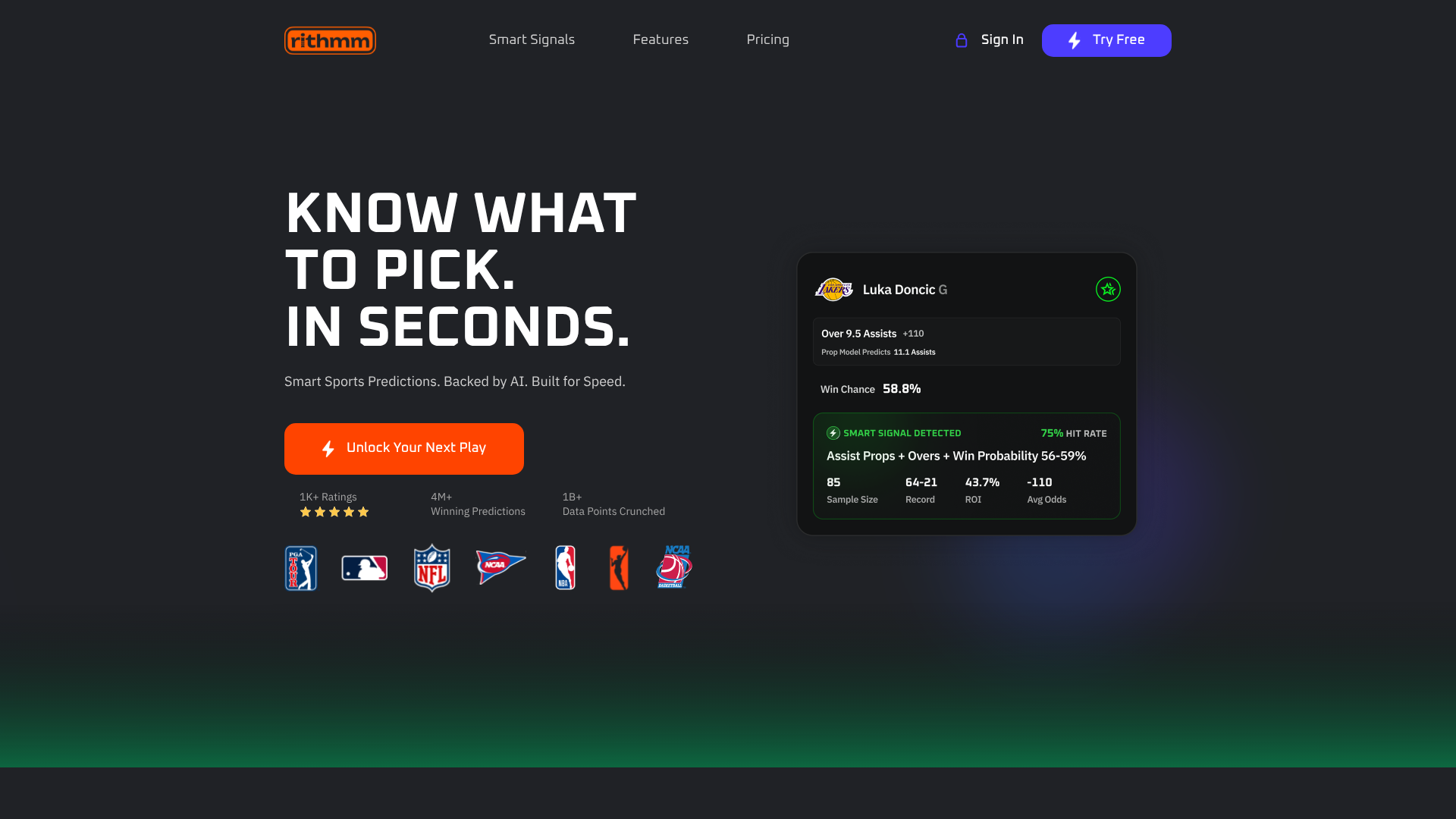
However, you don't have to be a programmer to use this approach. A new generation of tools is making this technology accessible to everyone. For instance, Rithmm is a platform that allows users to build and customize their own AI-powered betting models without writing a single line of code. You can select which stats you believe are most important, and the platform generates data-driven predictions and identifies value bets for you.
This allows you to harness the power of advanced analytics in your football wagering strategies.
In-Game Action: Strategies for Live Betting
Live betting, or in-play wagering, allows you to place bets on a game after it has started. The odds and lines are updated in real-time based on what's happening on the field. This creates a fast-paced and dynamic environment that can offer unique opportunities if you are prepared and disciplined.
One of the best live betting strategies is to look for overreactions in the market. For example, if a heavy pre-game favorite gives up an early touchdown, their live moneyline odds might drift to a much more favorable price. If your pre-game analysis still suggests they are the superior team, this is a great time to bet on them at a discount. The public often overreacts to early scores, creating value for patient bettors who trust their initial research.
Another strategy is to bet on totals based on the pace of the game. If a game starts with a frantic, up-and-down pace with multiple quick scores, the live 'Over' total might become inflated. However, teams often settle down, and the pace can slow, creating value on the live 'Under'. Conversely, a scoreless first quarter might cause the live 'Under' to be heavily favored, creating an opportunity to bet the live 'Over' at a good price if you expect the offenses to eventually find their rhythm.
Tournament vs. League Betting: Adjusting Your Approach
Betting on a regular-season league game is different from betting on a single-elimination tournament match, and your strategy should adapt accordingly. The regular season is a marathon. With a large sample size of games, team performance tends to normalize, and the better teams usually rise to the top. This makes statistical models and long-term data more reliable.
Tournament play, like the NFL Playoffs or the World Cup, is a sprint. The sample size is tiny, and variance plays a much larger role. A single unlucky bounce or a bad call can end a team's season. In these high-pressure, single-elimination scenarios, motivational factors and psychological pressure can be just as important as statistical superiority.
Underdogs often have more value in tournaments because the "win or go home" format can level the playing field.
When betting on tournaments, pay closer attention to team health and fatigue. Teams playing their third game in ten days will be at a disadvantage. Also, consider coaching strategies. In a must-win game, a coach might be more aggressive, going for it on fourth down or attempting trick plays.
Your approach must be more flexible and account for the unique context of knockout-style competition.
The Mental Game: Psychological Factors in Sports Betting
Even with the best data and a perfect staking plan, your success can be derailed by your own psychology. Many bettors fall victim to cognitive biases that lead to poor decisions. Understanding these biases is the first step to overcoming them.
Confirmation Bias: This is the tendency to seek out and favor information that confirms your existing beliefs. If you want to bet on a team, you might only focus on the stats that support your case while ignoring the ones that don't. To combat this, actively play devil's advocate and try to build the strongest possible case for betting against your initial instinct.
Recency Bias: This is giving too much weight to recent events. A team that looked great last week is not guaranteed to look great this week. A single game is a small sample size. Always zoom out and consider a team's performance over a larger stretch of the season to get a more accurate assessment of their quality.
Gambler's Fallacy: This is the mistaken belief that if something happens more frequently than normal during a given period, it will happen less frequently in the future. For example, believing a team is “due” for a win after losing five games in a row is a fallacy. Each game is an independent event, and the outcome of the last game has no bearing on the next one.
Discipline is the cure for these biases. Stick to your strategy, trust your research, and never let a single win or loss cause you to deviate from your plan. Detach emotion from your decision-making process.
Staying Safe and Smart: Legal and Responsible Gambling
No guide on betting strategies is complete without a discussion of responsible gambling. The goal is to make a long-term profit, but it should always be a form of entertainment, not a source of financial stress. Only wager in jurisdictions where sports betting is legal and regulated.
It's crucial to know when to stop. If you find yourself chasing losses, betting more than you can afford, or if betting is no longer fun, it's time to take a break. Numerous resources are available to help. Organizations like the National Council on Problem Gambling offer confidential help and support.
Their national helpline is available at 1-800-522-4700. Always bet with your head, not over it.
Leveraging Expertise: Following Pro Betting Tips
For those who don't have the time to do hours of research every week, following expert football betting tips can be a viable option. However, this path requires its own form of due diligence. The internet is filled with self-proclaimed “gurus” selling picks with promises of guaranteed wins. There are no guarantees in sports betting.
When evaluating a service or expert, look for transparency and a long-term, verified track record. A legitimate expert will track every single pick they give out—both wins and losses—and make that record publicly available. They should be able to show a consistent, positive ROI over a large sample size of hundreds or even thousands of bets. Be wary of anyone who only advertises their winning tickets or promises unrealistic returns.
Even when following an expert, it's best to use their picks as a component of your own strategy rather than blindly tailing them. Read their analysis and understand why they are making a particular bet. Does their reasoning align with your own research? Using expert tips to supplement your own handicapping can be a powerful combination.
FAQ: Answering Your Top Questions
What is the most successful betting strategy in football?
There is no single “most successful” strategy that guarantees wins. The most successful bettors combine several core principles: strict bankroll management (the unit system), consistently finding value bets (where the odds are better than the true probability), and shopping for the best lines across multiple sportsbooks. A strategy that ignores any of these pillars is unlikely to be profitable in the long run. Success comes from the disciplined application of all these concepts together.
What is the 1-3-2-6 betting strategy?
The 1-3-2-6 is a positive progression staking system. You start by betting 1 unit. If you win, your next bet is 3 units. If you win again, the next is 2 units, and a third win leads to a 6-unit bet.
A loss at any stage resets you back to a 1-unit bet. The goal is to maximize profits during a winning streak. However, like all progression systems, it does not change the underlying odds of the game and can lead to significant losses if you hit a losing bet on one of the higher-stake wagers.
What is the best NFL betting strategy?
The best NFL betting strategies are grounded in data and an understanding of the league's specific nuances. This includes paying close attention to key numbers in point spreads, particularly 3 and 7, as many games are decided by these margins. Advanced metrics like DVOA and EPA are especially powerful for the NFL. Additionally, situational handicapping—analyzing how teams perform after a bye week, on short weeks (Thursday Night Football), or in specific divisional matchups—is a crucial component of a successful NFL strategy.
What is the 80/20 rule in betting?
The 80/20 rule, or the Pareto Principle, suggests that roughly 80% of your results will come from 20% of your efforts. In betting, this can mean that 80% of your profits might come from 20% of your most effective strategies or bet types. By tracking your bets, you can identify that profitable 20%—whether it's betting on totals, specializing in a specific conference, or focusing on player props—and dedicate more of your time and bankroll to those areas to maximize your returns.
Final Thoughts
Developing effective betting strategies for football is a journey that requires patience, discipline, and a commitment to continuous learning. There is no magic bullet or guaranteed system for success. Instead, profitability is built on the consistent application of sound principles: manage your money wisely, do your homework, remove emotion from your decisions, and always hunt for value.
Start by mastering the fundamentals of bankroll management and understanding the different bet types. As you gain experience, you can incorporate more advanced concepts like analyzing market movements and using data models. The key is to find a process that works for you and stick to it, through both winning and losing streaks.
For bettors serious about gaining an edge, leveraging modern tools can make a significant difference. Platforms like OddsJam can automate the process of finding value, while services like Rithmm can give you access to AI-driven insights without needing a background in data science. These tools can supplement your own research and help you make smarter, more informed wagers.