









How to Develop Good Football Betting Strategies: A Beginner's Guide to Winning More
Moving beyond casual weekend bets and into the realm of profitable sports investing requires a significant shift in mindset. It’s not about luck or gut feelings; it's about developing good football betting strategies that give you a consistent edge over the sportsbooks. This means treating betting like a business, where every decision is based on data, discipline, and a clear, repeatable process. Forget trying to predict every winner and instead focus on finding value in the market.
This guide will walk you through the foundational principles and advanced techniques that separate casual bettors from sharp, profitable ones. We'll cover everything from the non-negotiable rule of bankroll management to sophisticated methods like value betting and arbitrage. By the end, you'll have a clear roadmap for building your own effective betting strategies for football.
What You'll Learn
- Bankroll Management is Non-Negotiable: The most critical skill for long-term survival and growth in sports betting is managing your money with a strict unit-based system.
- Value is Everything: The core of all successful betting is finding Positive Expected Value (+EV), which means placing bets where the odds offered are better than the true probability of the outcome.
- Specialization Creates an Edge: You can't be an expert on every team and every league. Focusing on niche markets or specific bet types is one of the fastest ways to gain an advantage.
- Advanced Strategies Lower Risk: Methods like arbitrage betting allow you to lock in guaranteed, risk-free profits by exploiting price differences between sportsbooks.
- Tools Can Accelerate Success: Modern betting tools can automate the process of finding value bets, arbitrage opportunities, and analyzing player props, saving you hours of manual research.
What Are Good Football Betting Strategies? (Beyond Just Picking Winners)
A common misconception is that a good strategy is simply a method for picking the winning team. While picking winners is part of the equation, a true strategy is a comprehensive system that governs every aspect of your betting activity. It's a framework designed to maximize returns, minimize risk, and ensure long-term profitability.
At its core, a robust football betting strategy is built on four pillars: disciplined bankroll management, rigorous data analysis, unwavering psychological control, and a consistent method for identifying value. It's the difference between gambling and investing. A gambler bets on their favorite team to win the Super Bowl out of loyalty, while a strategist analyzes whether the +500 odds on that team represent a positive long-term investment based on their actual chances.
This systematic approach stands in stark contrast to the habits that keep most bettors in the red. These include chasing losses with bigger, more desperate bets after a bad day, placing emotional wagers based on team loyalty, and blindly backing heavy favorites without considering the poor value their odds present. Adopting a strategic mindset means leaving these behaviors behind and committing to a process-oriented approach where the quality of the decision matters more than the outcome of any single bet.
The Foundation: Essential Principles for Every Bettor
Before diving into specific techniques, you must master the fundamentals. These principles are the bedrock of all good football betting strategies. Ignoring them is like building a house on a foundation of sand; it doesn't matter how sophisticated your methods are if the base is weak.
Master Bankroll Management: The Golden Rule
Bankroll management is the single most important skill in sports betting. Without it, even the sharpest bettor will eventually go broke. The goal is to protect your capital from the natural swings of variance and ensure you can withstand a losing streak without wiping out your account.
The most effective way to do this is through a unit-based system. A "unit" is a fixed percentage of your total betting bankroll, typically between 1% and 3%. For example, if your bankroll is $1,000, a 1% unit would be $10. Every bet you place would be a multiple of this unit size, based on your confidence in the wager.



This approach enforces discipline and removes emotion from your staking decisions. After a tough loss, the temptation to place a large "get it all back" bet is strong, but the unit system prevents this catastrophic error. It ensures that no single bet can cripple your bankroll, allowing you to stay in the game long enough for your edge to materialize.

Understand Odds and Implied Probability
Odds are more than just a payout calculation; they represent the sportsbook's assessment of an outcome's probability. To find value, you must learn to think in terms of probability. American odds of -110, common for point spreads, imply a 52.38% chance of that outcome occurring. The extra 2.38% over 50% is the sportsbook's commission, known as the "vig" or "juice."
Your job is to determine if the true probability of an event is higher than the probability implied by the odds. If you believe a team has a 55% chance to cover the spread, betting them at -110 (52.38% implied probability) is a "value bet." This concept, known as Positive Expected Value (+EV), is the mathematical foundation of all professional betting.
Understanding this relationship is crucial. It shifts your focus from simply asking "Who will win?" to asking "Is the price right?" This is the fundamental question that all successful bettors ask before placing a wager.
The Importance of Line Shopping
Not all sportsbooks offer the same odds on the same game. One book might have the Kansas City Chiefs at -6.5, while another offers them at -7. This half-point difference can be the deciding factor between a winning and a losing bet over the long run. Line shopping is the practice of checking odds across multiple sportsbooks to ensure you get the best possible price for your bet.
Think of it like shopping for a car. You wouldn't buy from the first dealership you visit without checking prices elsewhere. The same logic applies to betting. Securing odds of +105 instead of -105 might seem small, but these incremental gains in value add up to a significant increase in your overall profitability over hundreds or thousands of bets.
To do this effectively, you should have accounts at a minimum of 3-5 different sportsbooks. This allows you to quickly compare lines and place your wager where the payout is highest or the point spread is most favorable. It's a simple step that has a massive impact on your bottom line.

Core Betting Strategies for Football: From Beginner to Intermediate
Once you've mastered the fundamentals, you can begin implementing specific betting strategies for football. These methods are designed to help you systematically identify and exploit market inefficiencies.
Value Betting: The Professional's Approach
Value betting is the cornerstone of professional sports investing. It's the practice of consistently placing bets that have a Positive Expected Value (+EV). In simple terms, you are looking for situations where you believe the likelihood of an outcome is greater than the implied probability offered by the sportsbook's odds.
Imagine a coin toss. The true probability of heads is 50%. If a sportsbook offered you +110 odds (implying a 47.6% probability) on heads, this would be a massively +EV bet. Even though you might lose the first flip, if you made that same bet 1,000 times, you would be guaranteed to make a substantial profit.
Finding these +EV opportunities manually requires a lot of research and sophisticated modeling. However, tools have emerged to automate this process. For example, an odds comparison tool like OddsJam constantly scans lines across dozens of sportsbooks. It uses market data to identify bets where a sportsbook's line is significantly different from the rest of the market, flagging it as a potential +EV wager.

Pro Tip: Don't be discouraged by the variance of value betting. You will have losing days and weeks. The key is to trust the math and the process. A +EV bet is profitable in the long run, regardless of the result of a single game.
Specialization: Become an Expert in a Niche
You cannot be an expert on the NFL, college football, the English Premier League, and La Liga all at once. The amount of information is overwhelming. A much more effective approach is to specialize. By focusing on a specific league, conference, or even a single bet type, you can develop a deep knowledge base that gives you an edge over the generalist oddsmakers.
Perhaps you focus solely on MAC conference college football. You can learn the teams, coaches, and player tendencies inside and out. You might notice that a specific team consistently underperforms on the road or that a certain coach is overly conservative on fourth down. This granular knowledge allows you to spot value that the broader market might miss.
Another popular specialization is player props. Instead of betting on game outcomes, you focus on individual player statistics like passing yards, receptions, or touchdowns. This is a market where deep research can pay off. Tools like Props.Cash are designed for this niche, providing detailed historical data, matchup analysis, and trends to help prop bettors make informed decisions.
Contrarian Betting: Fading the Public
Sportsbooks don't set lines based on who they think will win; they set lines to attract equal money on both sides of a bet. The general betting public tends to favor popular teams, star players, and overs. This predictable bias can skew betting lines, creating value on the other side.
Contrarian betting, or "fading the public," involves betting against these popular opinions. For example, if the Dallas Cowboys (a very popular public team) are playing the Jacksonville Jaguars, heavy public betting might push the spread from Cowboys -7 to -8.5. A contrarian bettor sees this inflated line and recognizes the new value on the Jaguars at +8.5.
This strategy isn't about blindly betting on every underdog. It's about identifying games where public sentiment has created an artificially valuable line. By going against the grain in these specific situations, you can often find yourself on the same side as the sharp, professional money.
Advanced Betting Strategies for Football: Lowering Risk and Finding Edges
For those looking to take their betting to the next level, advanced strategies can offer unique opportunities. These methods often require more speed, capital, or specialized tools but can provide lower-risk returns.
Arbitrage Betting ("Arbing")
Arbitrage betting is a mathematical method that guarantees a risk-free profit. It involves placing bets on every possible outcome of an event across different sportsbooks whose odds have a pricing discrepancy. When the odds are right, you can lock in a small profit regardless of who wins the game.
For example, imagine a tennis match. Sportsbook A has Player 1 to win at +110. Sportsbook B has Player 2 to win at -105. By placing a calculated amount on each player, you can guarantee a profit.
While these opportunities are rare and disappear quickly, they offer a way to build a bankroll with virtually no risk.
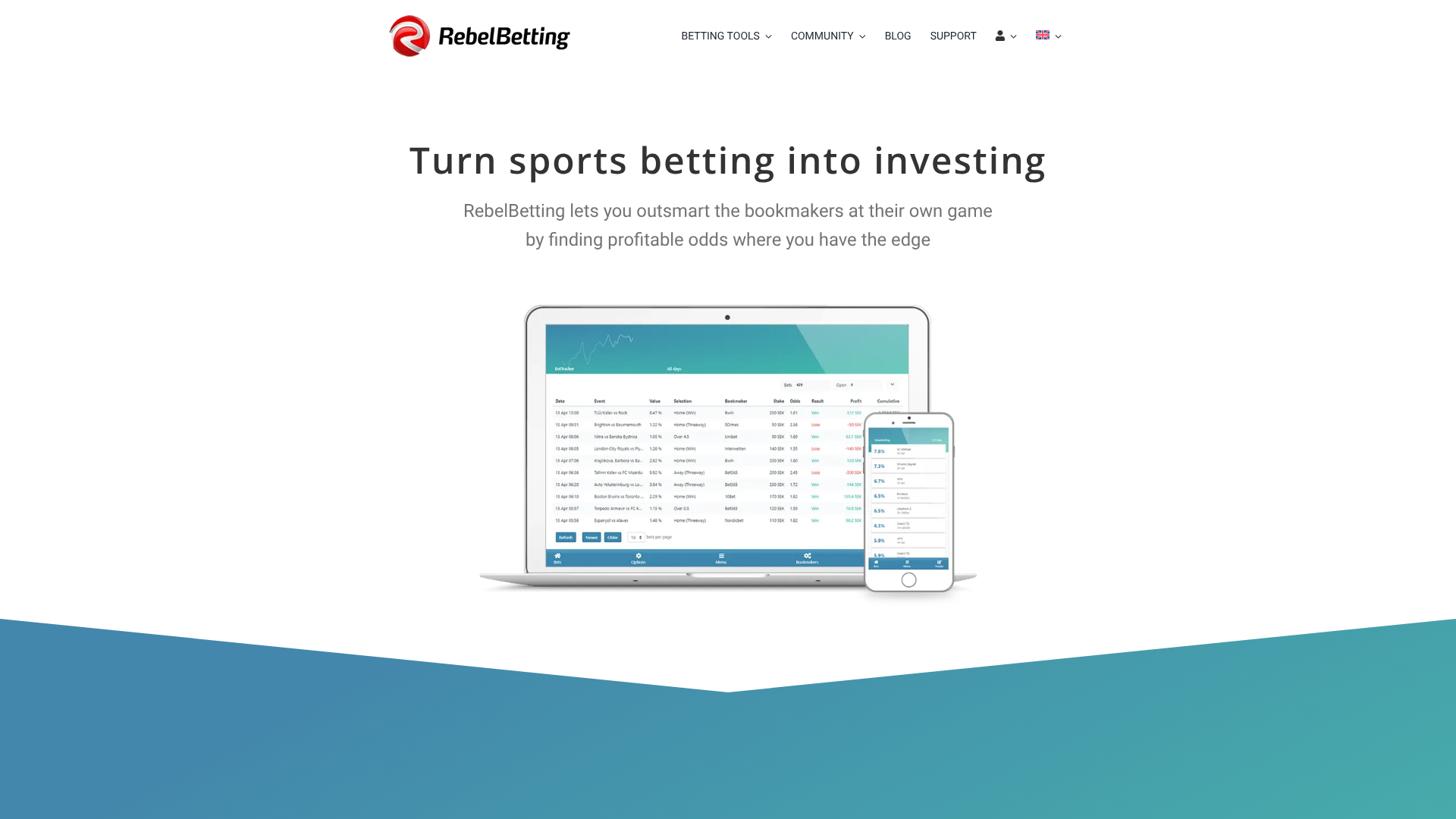
Finding these arbs manually is nearly impossible. This is where specialized software becomes essential. Services like RebelBetting and Arb Amigo are built specifically to scan the market in real-time and alert users to arbitrage opportunities as soon as they appear. The main downside is that sportsbooks dislike arbitrage bettors and may limit the accounts of those who practice it frequently.
In-Play (Live) Betting Strategies
Live betting opens up a dynamic world of opportunities that don't exist before kickoff. Odds change rapidly based on the flow of the game, and sharp bettors can capitalize on overreactions from the market.
One popular strategy is to bet on a heavy pre-game favorite if they concede an early goal or go down by a touchdown. Their live odds will become much more favorable, offering significant value if you believe they will still mount a comeback and win. Another common soccer strategy is "Laying the Draw," where you bet against the game ending in a tie, often after a goal has been scored and the game has opened up.
This video provides a great explanation of how the Lay the Draw strategy works in practice:
Building Your Own Models
The pinnacle of data-driven betting is creating your own predictive models. This involves using statistical analysis and historical data to project game outcomes and identify discrepancies with the sportsbook lines. Historically, this required advanced skills in coding and statistics.
However, new platforms are making this accessible to more people. Tools like Rithmm use AI to allow users to build and backtest their own custom betting models without writing a single line of code. You can choose which stats you think are most important (like DVOA, EPA/play, or offensive line grades), and the platform will generate model-based picks for you. This approach removes all emotion and bias, turning betting into a purely analytical exercise.
Comparing Different Football Betting Approaches: Pros and Cons
Choosing the right strategy depends on your personality, goals, and resources. There is no single "best" approach for everyone. Here’s a breakdown of the three main categories of strategies to help you decide which path might be right for you.
| Strategy | Risk Level | Potential Profit | Time Commitment | Required Skill/Tools |
|---|---|---|---|---|
| Value Betting | Medium-High | High | Medium | High analytical skill; tools like OddsJam help |
| Arbitrage Betting | Very Low | Low-Medium | High (Speed is key) | Low skill, but requires tools like RebelBetting |
| Model-Based Betting | Medium | High | High (Initial setup) | High analytical skill; tools like Rithmm simplify |
Value Betting
- Pros: Offers the highest potential for long-term profit. It's the method used by nearly all professional sports bettors.
- Cons: Involves high variance. You will experience losing streaks, and it requires strong psychological discipline to stick with the process.
Arbitrage Betting
- Pros: It's virtually risk-free when executed correctly. It's a great way to build an initial bankroll.
- Cons: Profit margins are typically small (1-3%). Opportunities disappear in seconds, and sportsbooks will quickly limit or ban accounts that they identify as arbers.
Model-Based Betting
- Pros: A completely data-driven approach removes human emotion and bias. It is scalable and can be applied across many games simultaneously.
- Cons: There is a steep learning curve to building an effective model. It requires access to clean data and a strong understanding of statistical concepts.
How to Choose the Right Betting Strategy for You
Selecting the right strategy is a personal decision based on a clear-eyed assessment of your own circumstances and personality. There's no one-size-fits-all answer. Consider these key factors before committing to a specific path.
First, evaluate your risk tolerance. Are you comfortable with the ups and downs of value betting, where you might endure a week of losses before seeing profits? Or does the idea of guaranteed, risk-free profit from arbitrage appeal more, even if the returns are smaller? Your ability to stomach variance is a critical factor.
Next, consider your time commitment. Arbitrage betting requires you to be ready to act at a moment's notice. Value betting and modeling require significant upfront research time each week. Be realistic about how many hours you can dedicate to your betting activities.
Your bankroll size also plays a role. Arbitrage often requires having funds in many different sportsbook accounts to act quickly. Value betting can be started with a smaller bankroll, as long as you adhere to strict unit sizing. Finally, assess your analytical skills.
If you love digging into spreadsheets and statistical analysis, model-based betting could be a great fit. If you prefer a more straightforward approach, specializing in a niche you know well might be more effective.
Frequently Asked Questions (FAQ)
What is the most successful betting strategy in football?
The most successful and sustainable long-term strategy is value betting. It's the practice of identifying bets where the odds are more favorable than the actual probability of the outcome. While other strategies like arbitrage can guarantee small profits, value betting offers the highest ceiling for growth and is the method used by virtually all professional sports bettors.
What is the 1-3-2-6 betting strategy?
The 1-3-2-6 is a positive progression staking system. You start by betting 1 unit. If you win, you bet 3 units. If you win again, you bet 2 units, and if you win a third time, you bet 6 units.
You revert to 1 unit after any loss or after completing the four-bet cycle. While it can be a fun way to manage stakes, it's important to understand that no staking plan can overcome the house edge. It doesn't make bad bets good; it only changes the pattern of wins and losses.
What is the best NFL betting strategy?
A successful NFL strategy is a combination of several principles. It involves specializing in the league, understanding the importance of key numbers in scoring (like 3 and 7), and diligently monitoring injury reports and line movements throughout the week. Many sharp NFL bettors focus on betting lines early in the week before the public money comes in and moves the numbers.
What is the 80/20 rule in betting?
The 80/20 rule, or Pareto Principle, suggests that roughly 80% of your results will come from 20% of your efforts. In betting, this means that the majority of your profits will likely come from a small portion of your most effective strategies or specialized markets. It's a reminder to identify what works best for you and focus your time and energy there, rather than spreading yourself too thin.
Is the Martingale strategy profitable?
No, the Martingale strategy is not a profitable long-term strategy and is extremely dangerous. This system requires you to double your bet after every loss, with the idea that you will eventually win and recoup all previous losses plus your original stake. The problem is that a losing streak can quickly lead to astronomically large bets that will either exceed your bankroll or hit the sportsbook's table limits, resulting in a catastrophic loss.
Final Thoughts: Building a Winning Approach
Developing good football betting strategies is a journey of continuous learning and refinement. There is no magic formula or guaranteed system for success. Instead, profitability is built on a foundation of discipline, a deep understanding of value, and a commitment to a consistent, analytical process.
Start by mastering the fundamentals: strict bankroll management, the ability to read odds, and the habit of line shopping. From there, explore the strategies that align with your personality and resources, whether it's the high-variance world of value betting or the low-risk approach of arbitrage. The key is to choose a path and stick with it, tracking your results and learning from both your wins and your losses.
If you're serious about finding a mathematical edge, tools can significantly shorten the learning curve. Platforms like OddsJam for value betting or RebelBetting for arbitrage can provide a structured starting point for a data-driven approach. Ultimately, the most successful bettors are those who treat it not as a hobby, but as a market to be analyzed and beaten.