









Actionable Betting Strategies for Football: A Beginner's Guide to Smarter Wagering
Winning consistently in sports betting is less about luck and more about discipline and a solid plan. Many bettors rely on gut feelings or favorite teams, which often leads to disappointment. The key to long-term success lies in adopting proven betting strategies for football that remove emotion from the equation and focus on mathematical value. This guide will walk you through the fundamental principles and actionable methods that separate casual bettors from sharp, profitable ones.
Whether you're new to the world of sports betting or looking to refine your approach, understanding these concepts is the first step toward making more intelligent wagers. We'll cover everything from managing your money effectively to identifying bets that offer a genuine edge over the sportsbooks. By the end, you'll have a clear roadmap for developing your own successful football wagering strategies.
What You'll Learn
- Bankroll Management is Non-Negotiable: The most critical strategy is protecting your capital. Never bet more than 1-5% of your total bankroll on a single wager to withstand losing streaks.
- Value is Everything: The most profitable bettors don't just pick winners; they find odds that are mispriced by the sportsbooks, known as positive expected value (+EV) betting.
- Specialization Creates an Edge: Instead of betting on every league and game, focusing on a specific niche (like a single league or prop market) allows you to develop deeper knowledge than the bookmakers.
- Discipline Trumps Emotion: Successful betting requires a systematic approach. Avoiding emotional decisions, like betting on your favorite team or chasing losses, is essential for long-term profitability.
What Are Football Betting Strategies?
A football betting strategy is a structured, long-term approach to wagering on soccer or American football. It's not about a single hot tip or a "guaranteed winner." Instead, it's a complete system that dictates how you manage your money, how you select your bets, and how much you stake on each one. Think of it as a business plan for your betting activities, designed to maximize profits and minimize losses over hundreds or thousands of bets.
A common misconception is to confuse a strategy with a simple tactic. For example, always betting on the home team is a tactic, but it's not a strategy because it lacks a basis in value or sound reasoning. A true strategy, like value betting, involves a process: analyzing odds, comparing them to your own assessment of probability, and only placing a bet when the odds offer a positive expected return. This systematic approach is what separates profitable bettors from the 97% who lose money long-term.
Effective football wagering strategies are built on core principles like bankroll management, statistical analysis, and market knowledge. They provide a framework that helps you stay disciplined during both winning and losing streaks. By following a consistent strategy, you remove guesswork and emotional impulses, which are the two biggest bankroll killers for the average bettor.

The Foundation: Essential Principles for Any Strategy
Before diving into specific methods, you must master the foundational principles that underpin all successful betting. Without these, even the most advanced strategy is doomed to fail. These are the non-negotiable rules of smart sports betting.
Master Bankroll Management
This is the single most important skill in sports betting. Bankroll management is the practice of allocating your betting funds in a way that prevents you from going broke during a downswing. The most common and effective method is a flat-staking or unit-based model.



Your "bankroll" is the total amount of money you have set aside for betting—money you can afford to lose. A "unit" is a percentage of that bankroll, typically between 1% and 3%. For example, if your bankroll is $1,000, one unit would be $10 (1%). No matter how confident you are in a bet, you would only stake one unit, or $10, on it.
This ensures that a string of unexpected losses won't wipe out your entire bankroll, allowing you to stay in the game long enough for your edge to materialize.
Understand Value Betting (+EV)
Profitable betting isn't about picking the team you think will win; it's about finding odds that are incorrect. This concept is known as finding "value" or placing positive expected value (+EV) bets. A bet has positive EV when the probability of it winning is greater than the probability implied by the sportsbook's odds.
For example, imagine a coin toss. The true probability of heads is 50%. If a sportsbook offered you odds of +110 (implying a 47.6% probability) on heads, that would be a +EV bet. Even though you might lose the flip, making that same bet over and over again would be profitable in the long run.
The challenge is accurately assessing the true probability of a football match outcome, which is far more complex than a coin toss.
Finding these value bets manually requires significant research and analysis. This is where technology can help. Tools like OddsJam are designed specifically to scan thousands of odds across dozens of sportsbooks to automatically identify +EV betting opportunities, saving you countless hours of work.

Avoid Emotional Betting and Personal Biases
Humans are prone to cognitive biases that can wreck a betting strategy. The most common is betting on your favorite team, regardless of the odds or matchup. You might overestimate their chances of winning because you want them to win. Another is confirmation bias, where you only look for information that supports a bet you already want to make, ignoring evidence to the contrary.
Chasing losses is another destructive emotional behavior. After a few bad beats, it's tempting to double your stake on the next game to win it all back quickly. This is a recipe for disaster and a direct violation of bankroll management principles. A successful strategy requires you to treat every bet as an independent event, with the stake determined by your unit plan, not by previous results.
Top Betting Strategies for Football Explained
With the foundational principles in place, you can explore specific strategies. Some are low-risk and designed for steady gains, while others are more advanced and carry higher variance. The best soccer betting methods are those that align with your goals, risk tolerance, and time commitment.
The Arbitrage Betting Strategy (Surebetting)
Arbitrage betting, or "surebetting," is a 100% risk-free strategy that guarantees a small profit regardless of the outcome. It works by exploiting discrepancies in odds across different sportsbooks. You place bets on all possible outcomes of an event at different bookies, and the difference in odds locks in a profit.
For example, imagine one sportsbook has the Kansas City Chiefs at +120 and another has their opponent, the Tampa Bay Buccaneers, at -110. By placing precisely calculated stakes on both sides, you could guarantee a small profit (typically 1-4%) no matter who wins. The main challenges are that these opportunities are rare, disappear quickly, and require accounts at many different sportsbooks. Speed is critical.
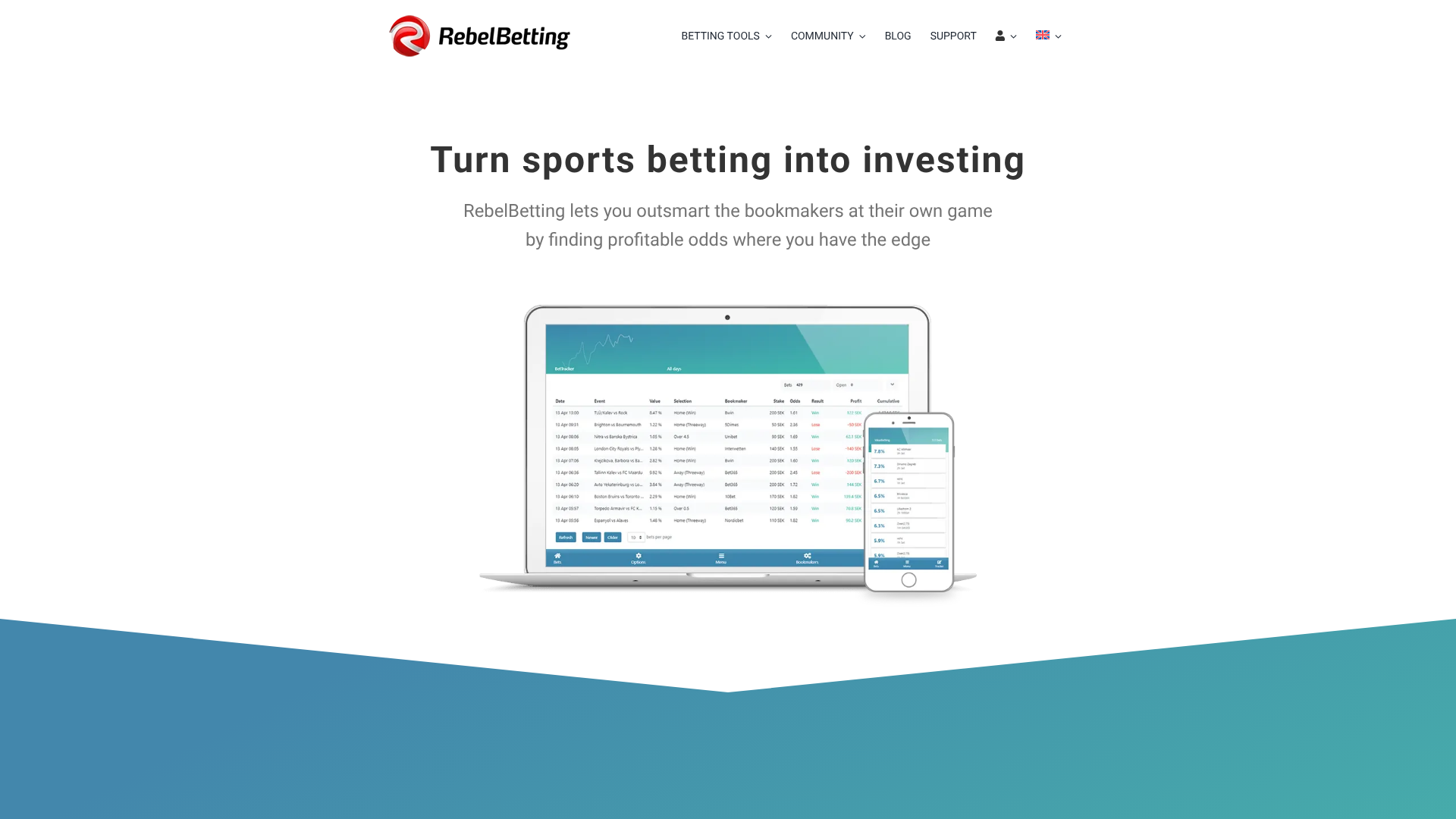
Because finding and calculating these bets manually is nearly impossible, specialized software is essential. Services like RebelBetting and Arb Amigo are built to constantly scan the market for arbitrage opportunities and alert you the second one appears, telling you exactly how much to stake at each book.
Matched Betting Strategy
Often confused with arbitrage, matched betting is a different low-risk technique focused on extracting value from free bets and promotional offers from sportsbooks. The core idea is to place a qualifying bet to unlock a free bet, then use that free bet to guarantee a profit.
You do this by placing a bet with the sportsbook's money (the free bet) and simultaneously placing an opposing bet (a "lay" bet) on a betting exchange. By covering all outcomes, you can lock in a profit equal to 70-85% of the free bet's value. While not entirely risk-free due to potential human error, it's one of the most popular methods for building an initial bankroll.
The Kelly Criterion for Stake Sizing
The Kelly Criterion is an advanced staking strategy that calculates the optimal bet size to maximize long-term bankroll growth. Unlike a flat-staking model where you bet the same unit every time, the Kelly Criterion adjusts your stake size based on both the perceived value of the bet and the size of your bankroll.
The formula is: (BP - Q) / B
- B = The decimal odds – 1
- P = The probability of winning
- Q = The probability of losing (1 – P)
While mathematically optimal, the full Kelly Criterion can be very aggressive and lead to wild bankroll swings. Most professional bettors use a fractional Kelly (e.g., 25% or 50% of the recommended stake) to reduce variance while still benefiting from its principles. This method is only recommended for advanced bettors who are highly confident in their ability to accurately calculate the true probability of an outcome.
Pro Tip: When starting with a new strategy, always paper trade first. This means you track your bets in a spreadsheet without risking real money. This allows you to test your methodology, identify flaws, and build confidence before putting your bankroll on the line.
Specialization and Niche Betting
Trying to be an expert on every football league in the world is impossible. The sportsbooks have teams of analysts and sophisticated algorithms setting the lines. A powerful way to gain an edge is through specialization. By focusing on a less popular league or a specific betting market, you can develop a deeper level of expertise than the bookmaker.
This could mean concentrating only on the English League Two, the Brazilian Série A, or specific prop markets like "Player Tackles" or "Shots on Target." These niche markets often receive less attention from oddsmakers, leading to softer, less efficient lines that a specialist can exploit. For player props, in particular, dedicated research tools can be invaluable.
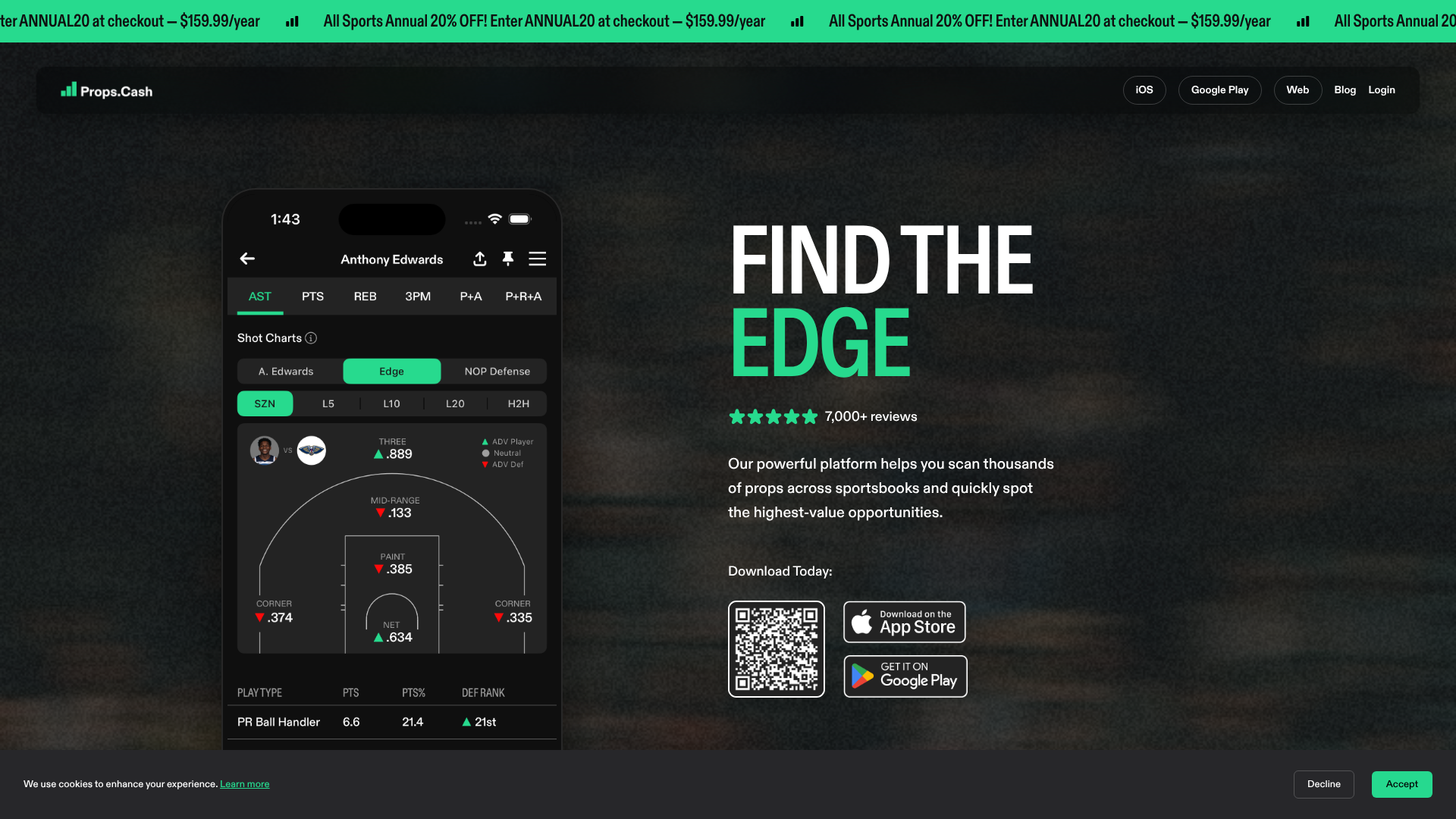
For instance, a platform like Props.Cash provides detailed historical data, defensive matchups, and performance trends for thousands of athletes. This allows you to conduct deep research on player props in minutes, a task that would otherwise take hours, giving you a significant informational advantage.
Statistical Modeling and AI-Driven Picks
For the data-savvy bettor, building your own statistical models can be a highly effective long-term strategy. This involves using historical data to create a system that predicts the outcomes of games. Your model might incorporate factors like expected goals (xG), defensive efficiency, recent form, and more to generate its own odds for a match. You then compare your model's odds to the sportsbook's odds to find value.
This approach requires significant statistical knowledge and can be time-consuming. However, new technology is making this strategy more accessible. AI-powered platforms like Rithmm allow users to build and backtest their own custom betting models without needing to code. You can select which stats you believe are important, and the AI will create a predictive model for you, helping you find a data-driven edge.
How to Choose and Implement Your Football Betting Strategy
Selecting the right strategy depends on your personality, goals, and resources. There's no single "best" method for everyone. Here’s how to find the right fit and put it into practice effectively.

Assess Your Risk Tolerance
Your comfort with risk is a primary factor. Are you looking for slow, steady, and nearly guaranteed gains, or are you comfortable with higher variance for a potentially greater reward?
- Low-Risk: If you're risk-averse, strategies like Matched Betting or Arbitrage Betting are ideal. They offer small but consistent returns with minimal danger to your bankroll.
- Moderate to High-Risk: If you have a higher risk tolerance and are confident in your analytical skills, Value Betting or using a fractional Kelly Criterion staking plan might be more suitable. These offer higher potential returns but also come with the certainty of losing streaks.
Consider Your Time Commitment
Different strategies require different levels of effort. Be realistic about how much time you can dedicate to betting each week.
- High Time Commitment: Arbitrage betting requires you to be ready to place a bet at a moment's notice, as opportunities vanish in minutes. Building your own statistical models is also a very time-intensive process.
- Lower Time Commitment: A value betting strategy can be less demanding, especially if you focus on placing bets well before a game starts. Using tools to find +EV bets or research props can also dramatically reduce the time needed.
Start Small and Track Everything
Regardless of the strategy you choose, start with small stakes. Use the 1% unit rule to begin. The most crucial habit to develop is meticulous record-keeping. Create a spreadsheet to track every single bet you make.
Your spreadsheet should include:
- Date of the bet
- Teams/Event
- Bet Type (e.g., Moneyline, Spread)
- Stake (in units and dollars)
- Odds
- Sportsbook
- Result (Win/Loss/Push)
- Profit/Loss
Tracking your bets allows you to honestly assess your performance. You can identify which types of bets are working for you and which aren't, helping you refine your strategy over time. It keeps you accountable and provides a clear picture of your return on investment (ROI).
Comparing Betting Methods: Pros and Cons
To help you decide, here's a direct comparison of some of the most popular football betting methods. This table breaks down the advantages and disadvantages of each, who they're best for, and whether specialized tools are beneficial.
| Strategy | Pros | Cons | Best For… | Tools Recommended? |
|---|---|---|---|---|
| Value Betting (+EV) | Highest long-term profit potential. Develops true analytical skill. | Requires patience and discipline to endure losing streaks. Finding value can be difficult. | Bettors with an analytical mindset looking for long-term profit. | Yes (e.g., OddsJam to find +EV bets) |
| Arbitrage Betting | Guaranteed, risk-free profit when executed correctly. | Profits are small (1-4%). Opportunities are rare and disappear fast. High risk of account limitations. | Bettors with a large bankroll and access to many sportsbooks who want guaranteed returns. | Essential (e.g., RebelBetting, Arb Amigo) |
| Matched Betting | Very low-risk way to build a bankroll. Easy for beginners to learn. | Reliant on sportsbook promotions, which can dry up. Not a long-term strategy. | Beginners looking to build an initial bankroll with minimal risk. | Helpful (Matched betting services) |
| Statistical Modeling | Can create a unique and sustainable edge. Highly scalable. | Requires advanced statistical knowledge and significant time investment. | Data-driven individuals with a background in stats or a willingness to learn. | Yes (e.g., Rithmm for no-code model building) |
A Note on Pricing and Costs
While basic strategies can be implemented for free, the most efficient methods often benefit from specialized tools. These tools typically operate on a monthly subscription model. Pricing can range from around $40 per month for basic services to several hundred dollars for professional-grade arbitrage software. Most reputable services offer free trials or money-back guarantees.
For the most current pricing, it's always best to visit the websites of tools like OddsJam or RebelBetting directly.
Advanced Accumulator and Parlay Strategies
Accumulators (or parlays) are incredibly popular because they offer the chance for a large payout from a small stake. However, they are generally poor value bets because the sportsbook's margin is multiplied with each leg you add. A standard four-leg parlay can have a house edge of over 30%. However, there are strategic ways to approach them.
One advanced method involves creating parlays using only +EV bets. If each individual leg of your parlay has a positive expected value, the entire parlay will also be +EV, often with a significantly higher edge. The challenge, again, is finding multiple +EV legs that can be combined. This is another area where a tool that identifies +EV opportunities can be a massive advantage.
For a deeper dive into making these types of bets work, this video from a professional trader offers some excellent insights:
Frequently Asked Questions (FAQ)
Here are answers to some of the most common questions about football betting strategies.
What is the most profitable way to bet on football?
The most profitable long-term strategy is consistently identifying and placing positive expected value (+EV) bets. This approach, known as value betting, focuses on finding odds that are higher than the true probability of an outcome. While arbitrage offers guaranteed but small profits, value betting provides the highest potential for sustainable, long-term growth because you are consistently beating the bookmaker's margin.
How can you win football bets mathematically?
You can win mathematically through two primary methods: arbitrage and value betting. Arbitrage guarantees a profit by covering all outcomes of an event at different odds, creating a risk-free return. Value betting wins mathematically over the long run by only taking bets where the probability of winning is greater than the implied probability of the odds. Both strategies rely on mathematical principles rather than luck or gut feeling.
What is the 1-3-2-6 betting strategy?
The 1-3-2-6 system is a positive progression staking plan where you increase your stake after a win. You start by betting 1 unit. If you win, you bet 3 units. If you win again, you bet 2 units, and if you win a third time, you bet 6 units.
If you lose at any stage, you return to betting 1 unit. While it can be fun, this system has no mathematical edge and does not overcome the house advantage. It's a money management tactic, not a strategy for finding value.
What is the best NFL betting strategy?
The best NFL betting strategies are based on the same core principles as soccer betting: bankroll management, finding value, and specialization. However, the NFL has unique factors to consider, such as the importance of key numbers in point spreads (3, 7, 10) and the massive impact of injuries, especially to key positions like the quarterback. A successful NFL strategy often involves "betting the numbers, not the teams" and reacting quickly to line moves and injury news.
What are common top bet mistakes?
The most common mistakes include poor bankroll management (betting too much per game), chasing losses, betting based on emotion or team loyalty, and failing to shop for the best odds. Many bettors also fall into the trap of paying for picks from "touts" without understanding the reasoning behind them. The single biggest mistake is betting without a clear, disciplined strategy.
Final Thoughts
Developing successful betting strategies for football is a journey that requires patience, discipline, and a commitment to learning. There is no magic formula for guaranteed wins, but by applying the principles of sound bankroll management, consistently searching for value, and removing emotion from your decision-making, you can dramatically improve your chances of long-term success.
Start by mastering the fundamentals. Protect your capital with a strict staking plan and learn to identify what makes a bet valuable. From there, you can explore more advanced methods like arbitrage, statistical modeling, or specializing in niche markets. Remember to track every bet to analyze your performance and refine your approach over time.
If you're serious about implementing these strategies efficiently, consider exploring tools that can give you an edge. Platforms like OddsJam for finding value, Props.Cash for player prop research, and Rithmm for building your own models can automate the heavy lifting and help you make smarter, data-driven decisions.