









10 Best Sports Betting Strategies to Win More in 2026
Winning consistently in sports betting isn't about luck; it's about discipline, research, and applying the right approach. Many bettors lose money because they treat it like a lottery, relying on gut feelings and chasing big payouts. To succeed long-term, you need to think like an investor, and that means using some of the best sports betting strategies to find an edge over the sportsbooks. This guide breaks down the most effective methods, from foundational principles to advanced techniques, that can help you make smarter, more profitable wagers.
This isn't a get-rich-quick scheme. Instead, it's a comprehensive look at the winning betting strategies that professional bettors use to build and maintain their bankrolls. By understanding and implementing these concepts, you can move away from guessing and start making data-driven decisions.
What to Know
- Bankroll Management is Non-Negotiable: The single most important strategy is managing your money. Without a strict bankroll plan, even a skilled bettor will eventually go broke.
- Value Betting is the Key to Profit: The core of all successful betting is finding "value"—placing wagers where the odds are more favorable than the true probability of the outcome.
- Line Shopping Instantly Boosts Returns: Simply getting the best possible odds on every bet you place is one of the easiest ways to increase your long-term profitability. Never settle for the first line you see.
- Emotional Discipline Separates Winners from Losers: Making decisions based on logic and data, rather than bias or frustration, is what separates profitable bettors from the public.
First, Let's Cover the Basics of Sports Betting
Before diving into complex strategies, it's essential to have a firm grasp of the fundamentals. If you're new to sports betting, these are the core concepts you need to understand. Think of this as the foundation upon which all effective betting methods are built.
First, you have the odds. Odds tell you the potential payout of a bet and the implied probability of an outcome. The three main formats are:
- American Odds: Displayed with a plus (+) or minus (-) sign. A minus sign (-150) shows how much you need to bet to win $100. A plus sign (+130) shows how much you win for every $100 you bet.
- Decimal Odds: Common in Europe and Canada, these show the total payout (stake + profit) for a $1 bet. For example, odds of 2.50 mean a $10 bet returns $25.
- Fractional Odds: Popular in the UK, these are displayed as a fraction (e.g., 5/1). This means you win $5 for every $1 you wager.
Next are the primary bet types. While there are hundreds of ways to bet, most wagers fall into three categories:
- Moneyline: The simplest bet. You are just picking which team or player will win the game outright, with no point spread involved.
- Point Spread: This bet is about the margin of victory. The favored team must win by a certain number of points (e.g., -7.5), while the underdog can win outright or lose by less than that number (e.g., +7.5).
- Totals (Over/Under): You're not betting on who wins, but on the total combined score of both teams. You wager on whether the final score will be over or under a number set by the sportsbook.
10 Best Sports Betting Strategies for Long-Term Success
Now that the basics are covered, we can explore the strategies that can give you a real advantage. These aren't magic formulas but disciplined approaches that, when combined, can lead to sustainable success.
1. Master Bankroll Management: The Foundation of All Winning Betting Strategies
This is the most important rule in sports betting, and it's not even close. Bankroll management is the practice of setting aside a specific amount of money for betting and only risking a small percentage of it on any single wager. Without it, a single bad run can wipe you out completely.
The most common method is the "unit" system. A unit is a percentage of your total bankroll, typically between 1% and 2%. For example, if your bankroll is $1,000, one unit would be $10 (1%). This means every bet you place would be for $10, regardless of how confident you feel.



This approach accomplishes two critical things. First, it protects you from catastrophic losses during an inevitable losing streak. Second, it removes emotion from your bet sizing, preventing you from "chasing" losses by placing larger bets out of frustration. Your goal is to stay in the game long enough for your edge to materialize.
Pro Tip: Track your Closing Line Value (CLV). Consistently placing bets at odds that are better than the final closing line is one of the strongest indicators of a long-term winning bettor. It shows you're identifying value before the market corrects itself.
2. Line Shopping: Never Settle for Bad Odds
Imagine two stores selling the exact same television. One sells it for $500, and the other sells it for $480. You'd always buy it from the cheaper store. Line shopping in sports betting is the exact same principle.
Different sportsbooks offer different odds on the same game because they have different risk exposures or opinions.
Having accounts at multiple sportsbooks (at least 3-5) is essential. Before placing any bet, you should compare the lines at each book and place your wager where you get the most favorable odds. A small difference, like getting +110 instead of +105, might not seem like much, but these small edges compound significantly over hundreds or thousands of bets, directly impacting your bottom line.
Manually comparing odds across several sportsbooks can be tedious. This is where tools like OddsJam become incredibly useful. They automatically scan dozens of sportsbooks in real-time to highlight the best available line for any bet, saving you time and ensuring you always get the best price.
3. Value Betting: Finding and Exploiting Inefficient Lines
Value betting is the core concept behind nearly all professional sports betting. It means identifying bets where the probability of an outcome is greater than the probability implied by the sportsbook's odds. In other words, you're finding a bet where the book has made a mistake in its pricing.
To find value, you must assess the true probability of an event better than the market. For example, if a sportsbook offers odds of +120 (an implied probability of 45.5%) on a team you believe has a 50% chance of winning, that is a positive expected value (+EV) bet. Over the long run, making bets with +EV will result in profit.
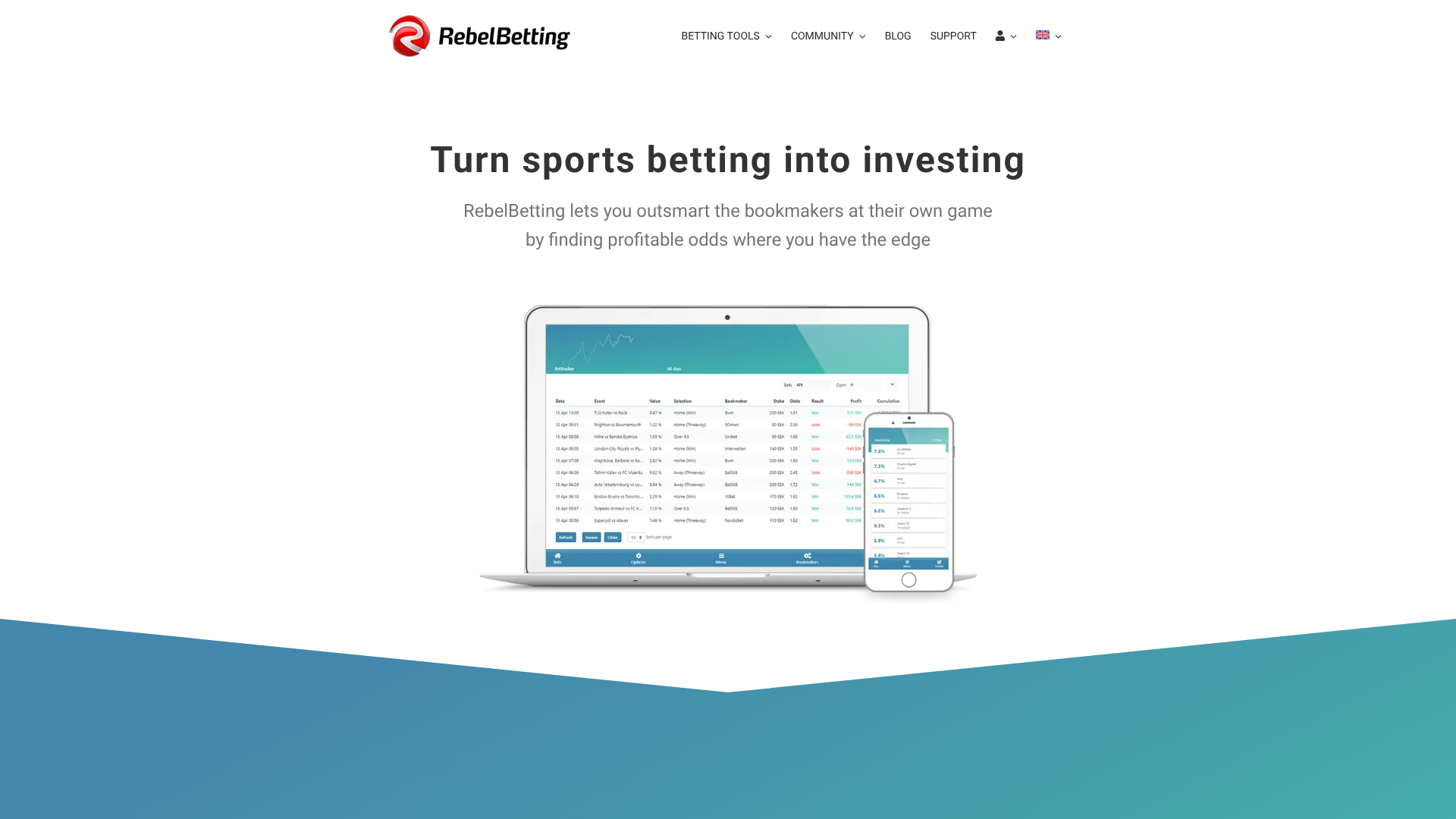
Finding these opportunities requires deep knowledge, statistical analysis, or the use of specialized software. Platforms like RebelBetting and OddsJam are designed to scan the market for these pricing discrepancies, flagging +EV opportunities that the average bettor would miss.
4. Arbitrage Betting: Guarantee a Profit Regardless of Outcome
Arbitrage betting, or "arbing," is a mathematically proven, risk-free strategy. It involves placing bets on all possible outcomes of an event across different sportsbooks whose odds are so far apart that you are guaranteed a small profit no matter what happens. This is a pure market inefficiency.
For example, imagine a tennis match. Sportsbook A has Player 1 at +110 odds, while Sportsbook B has Player 2 at +105 odds. By placing a specific amount on each player at these respective books, you could lock in a guaranteed profit of around 2-3% of your total stake. The outcome of the match becomes irrelevant.
The downsides are that arbitrage opportunities disappear quickly, the profit margins are small (typically 1-5%), and sportsbooks may limit the accounts of bettors who consistently engage in it. However, for those looking for a low-risk method, it's one of the most effective betting methods available. Tools like Arb Amigo are built specifically to find and calculate these arbitrage bets for you.

5. Specialize and Research: Become an Expert in a Niche
Sportsbooks have to set lines for thousands of events across dozens of sports. You only need to find an edge in one. Instead of betting on everything, successful bettors specialize. They focus on a single sport, league, or even a specific type of bet where they can develop a deep level of expertise.
By focusing on a niche, like WNBA player props or Korean baseball, you can gain an informational advantage over the sportsbook, whose resources might be spread thin. Your research should go beyond basic win-loss records. Analyze advanced metrics, team news, injury reports, weather conditions, and historical matchup data.
Pro Tip: Don't just look at a team's overall record. Analyze their performance against the spread (ATS), which gives a much better indication of how they perform against market expectations. A team that is 10-2 straight up but 4-8 ATS is consistently overvalued by the market.
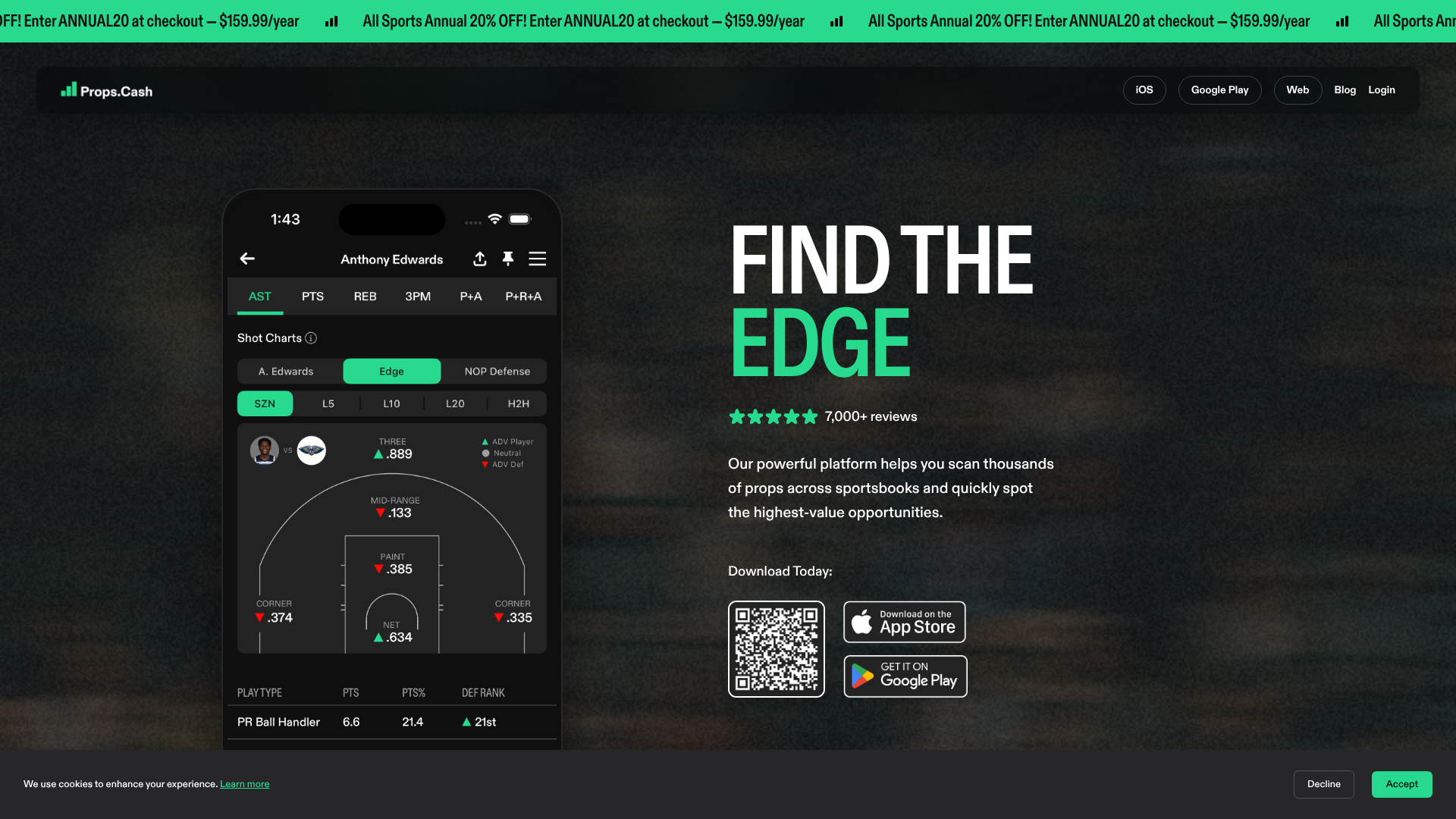
For those who want to specialize in player props, a tool like Props.Cash can be invaluable. It aggregates all the relevant data for player performance, including historical trends and matchup stats, making the research process much more efficient.
6. Fade the Public: A Contrarian Approach
"Fading the public" is a contrarian strategy that involves betting against the team that is receiving the majority of public bets. The theory is that the general betting public is often unsophisticated, betting with their hearts (on popular teams and stars) rather than their heads. This heavy, one-sided action can force sportsbooks to adjust their lines to mitigate risk, creating value on the other side.
This strategy is most effective in high-volume markets like the NFL, where public bias is most pronounced. For example, if 85% of the public is betting on the Kansas City Chiefs at -7, the line might move to -7.5 or -8 to encourage betting on the other side. This inflated line could present value for a contrarian bettor who believes the true spread should be closer to 6.5.
However, this is not a blind strategy. The public is sometimes right, so you still need to do your own analysis to confirm that the line has moved enough to create value. It's a tool in your arsenal, not a standalone system.
7. Develop or Use a Betting Model
Some of the most successful bettors in the world don't rely on subjective analysis at all. Instead, they build and use quantitative models that analyze historical data to predict outcomes and identify profitable betting opportunities. A model can be as simple as a spreadsheet using a few key stats or as complex as a machine-learning algorithm.
The goal of a model is to create its own "true" line for a game. If the model's line is significantly different from the sportsbook's line, it signals a potential bet. For instance, if your model projects a team as a -150 favorite, but the market has them at -120, that's a clear value opportunity according to your system.
Building a model from scratch requires strong statistical skills. For those who lack the time or expertise, platforms like Rithmm offer a solution. Rithmm uses AI to help you build custom betting models without needing to code, allowing you to leverage a quantitative approach to your betting.

8. Implement Effective Live Betting Methods
Live betting, or in-play wagering, offers a dynamic set of opportunities that don't exist before a game starts. The odds change rapidly based on what's happening in the game, and sharp bettors can capitalize on overreactions from the market or the sportsbook's algorithm.
One common live betting strategy is hedging. If you have a pre-game bet that is looking good, you can place a live bet on the other side to lock in a guaranteed profit. Another is "middling," where you bet on one side of a spread pre-game (e.g., +7.5) and then, if that team takes a big lead, bet on the other side live at a new spread (e.g., -3.5), creating a "middle" where you can win both bets.
Successful live betting requires watching the games closely, understanding momentum, and acting quickly. The lines move fast, so you need to be prepared to make decisions in seconds. It's a high-pressure environment but can be very profitable for those who are prepared.
9. Hedging Your Bets: Lock in Profit or Minimize Loss
While related to live betting, hedging deserves its own section. It's a risk management strategy where you place a bet on the opposite side of your original wager. This is most commonly done with futures bets or the final leg of a parlay.
Imagine you bet $100 on the Buffalo Bills to win the Super Bowl at +900 odds before the season. If they make it to the Super Bowl, you have a ticket that could pay out $1000. To hedge, you could place a bet on their opponent to win the game. By doing so, you can guarantee yourself a profit regardless of who wins the Super Bowl, though you sacrifice the maximum potential payout.
Deciding whether to hedge is a personal choice. A pure value bettor would argue against it, as it often reduces your long-term expected value. However, for bettors who want to guarantee a significant profit and reduce variance, it can be a very smart move.
10. Keep Detailed Records: Analyze Your Performance
If you don't track your bets, you have no way of knowing what's working and what isn't. Keeping a detailed record of every wager you place is a fundamental practice of all serious bettors. A simple spreadsheet is all you need to get started.
You should track the date, sport, teams, bet type, stake (in units), odds, and the result. Over time, this data will reveal your strengths and weaknesses. You might discover you're highly profitable betting on NBA totals but lose money on NFL spreads. This information is invaluable, allowing you to focus your efforts on areas where you have a proven edge and cut out the bets that are draining your bankroll.
The Critical Role of Data: How to Analyze Sports Statistics
Simply looking at a team's win-loss record is surface-level analysis. To find a real edge, you need to dig deeper into advanced statistics that provide a more accurate picture of team performance. Every sport has its own set of important metrics.
In football, for example, instead of just yards per game, look at metrics like DVOA (Defense-adjusted Value Over Average), which measures a team's efficiency on a play-by-play basis, adjusted for the situation and opponent. In soccer, Expected Goals (xG) can tell you if a team is getting lucky or unlucky, providing a better predictor of future performance than their actual goals scored.
It's also crucial to avoid common statistical fallacies. A team might be on a five-game winning streak, but if four of those wins were against bottom-tier opponents at home, that trend might be misleading. Always consider the context behind the numbers. The goal is to use data to paint a picture of how a team is likely to perform in the future, not just how it has performed in the past.
The Psychology of Betting: Mastering Emotional Discipline

Many bettors with solid analytical skills still lose money because they lack emotional discipline. The psychological aspect of betting is just as important as the strategic side. Your biggest opponent is often yourself.
One of the cardinal sins is betting on your favorite team. Your personal bias will cloud your judgment, causing you to overvalue their chances and ignore negative information. A professional bettor treats every game as a neutral event, driven by numbers, not fandom.
Pro Tip: After a big win, the temptation is to increase your unit size. Resist this urge. Stick to your bankroll management plan, as emotional highs can be just as dangerous as emotional lows. This is often called "winner's tilt."
Another major psychological pitfall is chasing losses. After a few bad beats, it's tempting to double your bet size on the next game to win it all back. This is a recipe for disaster and the fastest way to empty your bankroll. You must accept that losing streaks are a normal part of betting and stick to your plan no matter what.
Common Betting Mistakes to Avoid at All Costs
Knowing what not to do is as important as knowing what to do. Avoiding these common mistakes will instantly put you ahead of the majority of the betting public.
- Betting Too Much of Your Bankroll: Sticking to a 1-2% unit size is critical. Betting 10% or more on a single game is reckless and unsustainable.
- Placing Too Many Parlays: While the potential payouts are enticing, parlays are extremely difficult to win and carry a very high hold for the sportsbook. They are generally a losing proposition long-term.
- Ignoring Key Numbers in Spreads: In football, the difference between a spread of -2.5 and -3.5 is massive because so many games end with a 3-point margin of victory. Always be aware of these key numbers.
- Paying for Picks: The vast majority of services selling picks (often called "touts") are scams. If they were truly as successful as they claim, they wouldn't need to sell their picks. Learn to do your own research.
- Having Unrealistic Expectations: You are not going to get rich overnight. Successful sports betting is a long-term grind that involves small, incremental gains.
Understanding the Legal and Regulatory Landscape
Sports betting is not legal everywhere, and the rules can vary significantly by state or country. It's crucial to only bet with licensed and regulated sportsbooks. These operators are held to strict standards of fairness and security, ensuring your funds are safe and that you'll be paid out on your winnings.
Unregulated, offshore sportsbooks carry significant risks. They may have unfair terms, poor security, or could simply disappear with your money with no legal recourse. Always check the legal status of sports betting in your jurisdiction and stick to the licensed providers.
Furthermore, it's vital to practice responsible gaming. Betting should be a form of entertainment, not a way to solve financial problems. If you ever feel that your betting is becoming a problem, there are resources available to help. Organizations like the National Council on Problem Gambling offer confidential support and guidance.
Frequently Asked Questions About Sports Betting Strategies
What is the most successful betting strategy?
There is no single "most successful" strategy that works for everyone. The most profitable bettors use a combination of approaches. However, the universal foundation for all success is a combination of two things: disciplined bankroll management and consistently finding positive expected value (+EV) bets. Without these two pillars, no other strategy can be successful in the long run.
Value betting is the engine that generates profit, and bankroll management is the vehicle that keeps you on the road long enough to realize it.
What is the 1/3, 2/6 betting strategy?
The 1-3-2-6 system is a positive progression staking plan, meaning you increase your stake after a win. You start by betting one unit. If you win, you bet three units. If you win again, you bet two units.
If you win a third time, you bet six units. If you win the fourth bet, or if you lose at any stage, you revert back to one unit. The goal is to capitalize on winning streaks with a relatively small initial risk. However, like all staking systems, it does not change the underlying odds of the game and cannot turn a losing bettor into a winning one.
What is the 80/20 rule in betting?
The 80/20 rule, or Pareto Principle, suggests that roughly 80% of your results come from 20% of your efforts. In sports betting, this often means that 80% of your profits will come from 20% of your bets or the area you specialize in. This principle reinforces the importance of specialization. By identifying the small area where you have the biggest edge (your 20%) and focusing your time and bankroll there, you can significantly improve your overall profitability rather than spreading yourself thin across many different sports or bet types.
Who bet $100 to win 1.7 million?
This refers to a famous winning bet placed by a FanDuel user in 2021. The bettor placed a $100, 15-leg parlay on NFL games and correctly predicted all 15 outcomes, resulting in a massive payout of approximately $1.7 million. While an incredible story, it's important to view this as a lottery-ticket-style win. The odds of hitting a 15-leg parlay are astronomically high, and for every one of these winners, there are millions of losing parlay tickets.
This example highlights the high-risk, high-reward nature of parlays, which are generally not a part of a sustainable, long-term winning strategy.
Final Thoughts: Building Your Winning Approach
Becoming a successful sports bettor is a marathon, not a sprint. It requires a commitment to learning, a disciplined mindset, and a consistent application of proven strategies. There is no magic bullet, but by focusing on the core principles of bankroll management, line shopping, and value betting, you can build a solid foundation for long-term success.
Remember to specialize, do your own research, and always maintain emotional control. Avoid common mistakes like chasing losses and betting on too many parlays. Treat your betting like a business, and you'll put yourself in the best possible position to turn a profit over time.
If you're ready to implement more advanced top sports betting tips, using specialized tools can provide a significant edge. To find value bets and the best lines across the market, consider exploring a platform like OddsJam. For those interested in arbitrage or building AI-powered models, tools like RebelBetting and Rithmm can help you execute these sophisticated strategies.