









How to Build Profitable Betting Strategies for Sports: A Beginner’s Guide
Many people believe that winning at sports betting is all about luck. While a lucky guess might win you a single bet, consistent profitability comes from a much different place: discipline, research, and a clear plan. Developing effective betting strategies for sports is what separates casual gamblers from sharp, successful bettors. It’s about shifting your mindset from hoping for a win to creating a process that generates value over the long term.
This guide will walk you through the essential components of building a solid sports betting strategy from the ground up. We’ll cover everything from managing your money and understanding odds to using data and controlling your emotions. Whether you’re just starting or looking to refine your approach, these principles will provide a framework for making smarter, more informed wagers.
What You’ll Learn
- Bankroll Management is Foundational: The single most important skill for long-term survival and success in sports betting is managing your money effectively. Without it, even the best
sports betting tipsare useless. - Value is Everything: The core of any profitable strategy is consistently finding “value” in the betting market—placing wagers where the odds offered are better than the true probability of an outcome.
- Data Beats Gut Feelings: While intuition has its place, successful
sports wagering strategiesare built on statistical analysis and objective data, not emotional hunches or team loyalty. - Psychological Discipline is Key: Your biggest opponent is often yourself. Learning to manage biases, avoid chasing losses, and maintain discipline during both winning and losing streaks is critical.
- Specialization Creates an Edge: You can’t be an expert on every sport. Focusing on a specific niche, like a particular league or bet type, allows you to develop deeper knowledge than the average bettor or even the sportsbooks.
The Foundation: Understanding Sports Betting Basics
Before you can develop complex strategies, you must have a firm grasp of the fundamental bet types. These are the building blocks of every wager you’ll place. Trying to run before you can walk is a quick way to deplete your funds.
First is the Moneyline bet, which is the simplest of all. You are just picking which team or player will win the game outright. If you bet on the favorite, you’ll risk more money than you stand to win. If you bet on the underdog, your potential payout is greater than your stake.
Next is the Point Spread. This is most common in sports like football and basketball. The sportsbook sets a margin of victory (the spread) for the favorite. The favorite must win by more than the spread to “cover,” while the underdog can lose by less than the spread or win the game outright for your bet to cash.
This levels the playing field between two mismatched teams.
Finally, there are Totals, or the Over/Under. The sportsbook sets a total number of points, goals, or runs expected in a game. You simply bet on whether the final combined score will be over or under that number. These three bet types—moneyline, spread, and totals—form the core of sports betting and must be understood completely before exploring more advanced betting tactics for sports.
Decoding the Numbers: Understanding Odds and Probabilities
Odds are more than just a representation of how much you can win; they are a direct expression of probability. To find value, you must be able to look at a set of odds and instantly understand the probability the sportsbook is assigning to that outcome. This is a non-negotiable skill for any serious bettor.



There are three main formats for odds: American, Decimal, and Fractional. In the U.S., American odds are standard. They are displayed with a plus (+) or minus (-) sign. A minus sign (e.g., -150) shows how much you need to risk to win $100.
A plus sign (e.g., +130) shows how much you win for every $100 you risk.
Converting these odds to implied probability is a simple calculation. For negative odds, the formula is: Odds / (Odds + 100) * 100. For -150, this would be 150 / (150 + 100) = 60%. For positive odds, the formula is: 100 / (Odds + 100) * 100.
For +130, this would be 100 / (130 + 100) = 43.5%. Understanding this conversion allows you to compare the sportsbook’s probability to your own, which is the heart of value betting.

The Cornerstone of Success: Bankroll Management Techniques
If you take only one thing away from this guide, let it be this: proper bankroll management is the most critical component of any successful sports betting strategy. Your bankroll is the total amount of money you have set aside specifically for betting—money you can afford to lose. Without strict rules for managing it, you are destined to fail.
The most important concept is the unit. A unit is a percentage of your total bankroll, typically between 1% and 3%. For example, if your bankroll is $1,000, a single unit would be $10 (1%). Every bet you place should be measured in units.
This flat-betting approach ensures that you never risk too much of your bankroll on a single game, protecting you from the inevitable losing streaks.
This disciplined approach prevents emotional decision-making. When you’re on a losing streak, the temptation to increase your bet size to win your money back—known as chasing losses—is immense. A unit-based system forces you to stay consistent. It also prevents you from getting overconfident during a winning streak and risking too much.
Your goal is to stay in the game long enough for your edge to materialize, and that’s impossible without a disciplined bankroll strategy.

Click here to make money with sport betting
Finding the Edge: An In-Depth Look at Value Betting
Value betting is the core principle that underpins nearly all professional sports betting. It’s the process of identifying wagers where the probability of an outcome is greater than the implied probability presented by the sportsbook’s odds. In simpler terms, you’re looking for bets that offer a positive expected value (+EV).
Imagine flipping a coin. You know the true probability of heads is 50%. If someone offered you +110 odds (implied probability of 47.6%) on heads, that would be a value bet. Even though you might lose the flip, taking that bet repeatedly over time would be profitable.
This is the essence of value betting. You aren’t trying to predict winners with 100% certainty; you’re trying to find pricing mistakes in the market.
Identifying these opportunities requires you to create your own assessment of a game’s probabilities and compare them to the market. This can be done through statistical modeling, deep qualitative research, or a combination of both. Tools can also significantly speed up this process. For example, a platform like OddsJam scans dozens of sportsbooks in real-time to highlight +EV betting opportunities, doing the heavy lifting of line comparison for you.

Pro Tip: Don’t confuse a likely winner with a value bet. A team might be -500 to win (an 83.3% implied probability), but if your analysis shows their true chance of winning is only 80%, there is no value in that bet despite the high likelihood of it winning.
The Pro’s Toolkit: Types of Betting Strategies
Beyond the core principle of value betting, several specific betting tactics for sports can be employed to generate profit or manage risk. These often require more capital, speed, and access to multiple sportsbook accounts.
One of the most well-known is Arbitrage Betting. This is a risk-free strategy that involves placing bets on all possible outcomes of an event across different sportsbooks. Due to discrepancies in odds, a situation can arise where you are guaranteed a small profit regardless of who wins. For instance, you might bet on Team A at +110 at one book and Team B at -105 at another, locking in a guaranteed return.
This requires quick action, as these opportunities disappear fast. Specialized software like Arb Amigo or RebelBetting is often used to identify these fleeting chances.

Another common tactic is Hedging. This is a risk-management strategy used to reduce potential losses or lock in a guaranteed profit. For example, if you have a large futures bet on a team to win the championship and they make it to the final game, you could place a smaller bet on their opponent. This way, you guarantee a profit no matter which team wins, though you sacrifice the maximum potential payout.
Finally, there’s Fading the Public. This strategy involves betting against the team that is receiving the majority of public bets. The theory is that casual bettors often wager based on emotion and media narratives, which can skew betting lines. By betting against the popular side, you are often siding with the sharper, more analytical bettors and the sportsbooks themselves.
Using Data to Your Advantage: Statistical Analysis in Sports Betting
In the modern era, successful sports betting is driven by data. Relying on simple metrics like a team’s win-loss record or points per game is no longer enough to gain an edge. The best sports wagering strategies incorporate advanced statistical analysis to paint a more accurate picture of a team’s true performance.
This means looking at metrics that are more predictive of future success. In football, for example, instead of total yards, you might analyze yards per play or DVOA (Defense-adjusted Value Over Average). In soccer, expected goals (xG) provides a much better sense of a team’s performance than the final score alone. These advanced stats help strip away the noise and randomness that can influence the outcome of a single game.
Here’s a look at how data can be applied to find an edge:
Building your analysis around these deeper metrics requires more work, but it’s one of the most reliable ways to find value. It allows you to identify teams that may be overvalued or undervalued by the market based on their recent results rather than their underlying performance level. Over time, betting on teams that are performing well by advanced metrics but have a poor record due to bad luck is a powerful strategy.
Building Your System: Betting Models and Algorithms
A betting model is a system that uses statistical data to predict the outcome of games. These models can range from very simple to incredibly complex, but their goal is the same: to generate a more accurate probability of an outcome than the one implied by the sportsbook’s odds. Creating your own model is one of the most advanced sports betting tips you can implement.
A simple model might be based on a power rating system, where you assign a numerical value to each team and adjust it based on game results. By comparing the ratings of two teams and adding an adjustment for home-field advantage, you can generate your own point spread or moneyline. If your number differs significantly from the sportsbook’s line, you may have found a value bet.
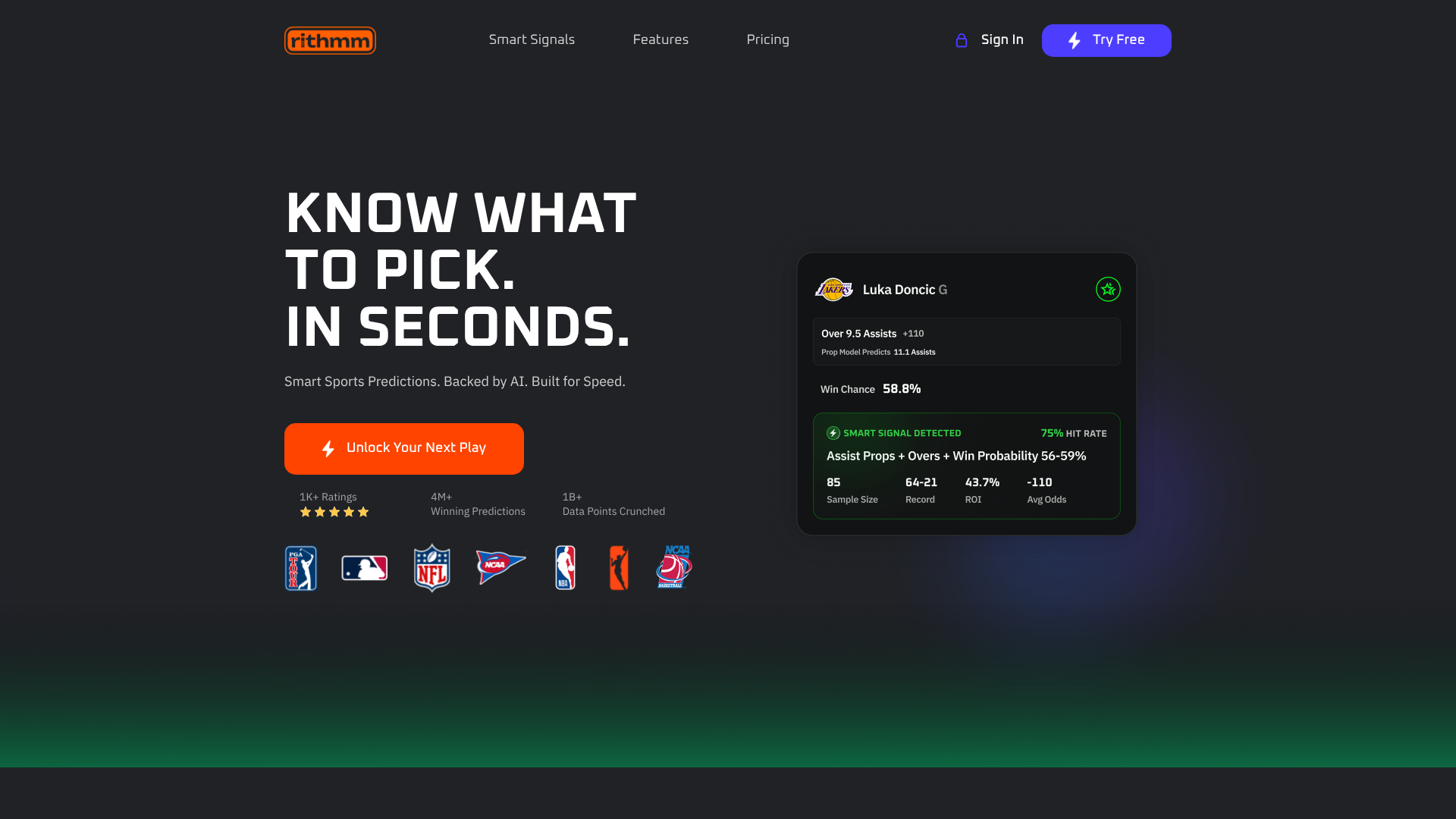
More complex models incorporate dozens of variables, from team-specific performance metrics to player-level data. In recent years, artificial intelligence and machine learning have made it possible to build highly sophisticated predictive models. For those without a background in data science, platforms like Rithmm are making this technology accessible. Rithmm uses AI to help you build and customize your own predictive models for sports betting, allowing you to test different factors and create a system tailored to your own insights.
The Mental Game: The Role of Psychology in Sports Betting
No matter how sophisticated your statistical model is, your success will ultimately be limited by your psychological discipline. Many bettors with a real analytical edge fail because they cannot control their emotions. Understanding and overcoming common cognitive biases is just as important as understanding the math.
One of the most common is Recency Bias, where you place too much weight on recent events. A team isn’t necessarily as good as their last win or as bad as their last loss. Another is Confirmation Bias, the tendency to seek out information that confirms your existing beliefs while ignoring evidence that contradicts them. If you like a certain team, you’re more likely to focus on stats that support betting on them.
Emotional detachment is crucial. This means never betting on your favorite teams, as your personal loyalty will cloud your judgment. It also means treating wins and losses with the same stoic approach. A big win shouldn’t lead to overconfidence and larger bets, and a tough loss should never lead to chasing.
A process-oriented mindset, where you focus on making good bets rather than the outcome of any single wager, is the key to long-term mental stability and success.
Real-Time Action: In-Play Betting Strategies
In-play, or live betting, offers a dynamic and fast-paced way to wager on games as they are happening. The odds and lines are constantly updating based on the action on the field. This creates unique opportunities but also presents significant challenges. A successful in-play strategy requires quick thinking, a deep understanding of the sport, and unwavering discipline.
One popular in-play strategy is looking for value after a significant momentum swing. For example, if a heavy favorite in a basketball game goes down by 10 points in the first quarter, their live moneyline odds will become much more favorable. If you believe the early deficit is an anomaly and the superior team will ultimately prevail, this can be a great time to find value that wasn’t available before the game.
However, the speed of live betting can be a double-edged sword. It’s easy to get caught up in the action and make impulsive bets based on a single play. Bankroll management is even more critical here. It’s wise to set a specific limit for how many units you are willing to risk on a single game in-play and stick to it, no matter what happens.
The Long Game vs. The Quick Win: Long-term vs. Short-term Strategies
Your betting portfolio can include both short-term and long-term wagers, each with its own strategic considerations. Short-term strategies focus on individual games happening today or this week. This is where most betting action occurs and where you can get immediate feedback on your analysis.
Long-term strategies, primarily Futures Betting, involve wagering on an outcome that will be decided weeks or months in the future, such as who will win the Super Bowl or the NBA Championship. The appeal of futures is the potential for large payouts on small wagers. You can often get very favorable odds on teams before the season starts or early in the year.
The downside of futures is that your money is tied up for a long period. This affects your bankroll, as those funds are not available for daily wagers. A balanced approach is often best. Dedicate a small portion of your bankroll to a few well-researched futures bets while using the majority for your day-to-day, value-based game betting.
What Really Matters: Factors Influencing Game Outcomes
To consistently find an edge, you need to analyze factors that the average public bettor might overlook. Going beyond the box score is essential for developing a nuanced understanding of a matchup.
Injuries are the most obvious factor, but their impact is often misjudged. The absence of a star player is significant, but the market often overreacts. The real value can be in understanding the impact of injuries to less-famous but crucial players, like an offensive lineman or a key defensive player.
Other critical factors include Travel and Schedule. A team playing its third road game in four nights is at a significant disadvantage compared to a well-rested team playing at home. Weather can also be a huge factor, particularly in football, where high winds or heavy rain can severely impact passing and kicking games, often favoring the under.
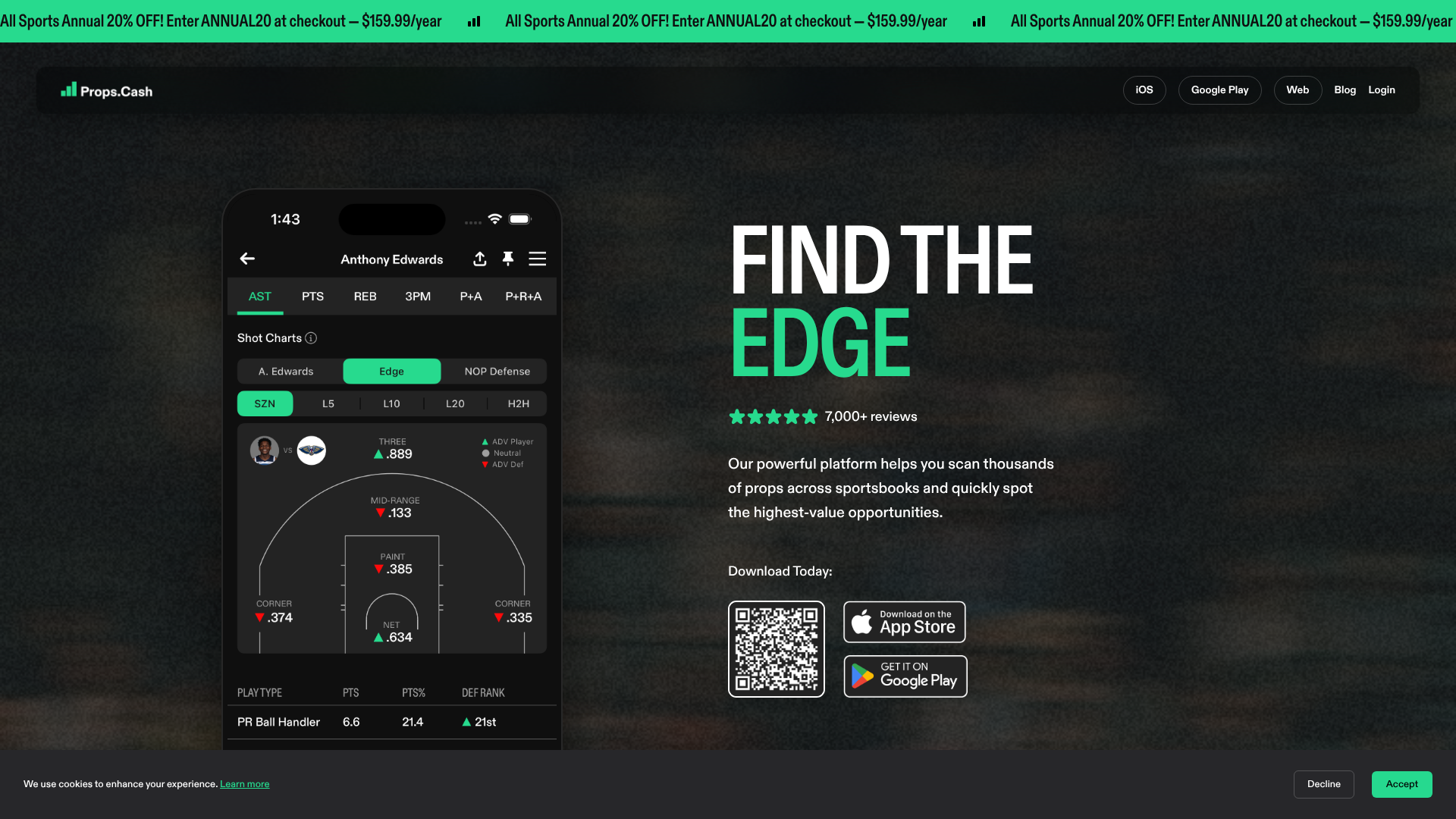
Finally, digging into player-specific data can unlock huge value, especially in the props market. Understanding a player’s performance in specific matchups or situations is key. Tools like Props.Cash are designed for this, offering detailed research on player props that helps you quickly identify trends and favorable lines.
Learning from the Past: Using Historical Data for Predictions
Historical data is the bedrock of statistical analysis, but it must be used intelligently. A common mistake is to rely on simple trends without understanding the context behind them. For example, a trend showing that a team is 8-2 against the spread in their last 10 games might seem compelling, but it has little predictive power on its own.
The key is to use historical data to establish a baseline for performance. You can analyze years of data to determine the true value of home-field advantage in a particular sport or the statistical impact of a specific weather condition. This provides a solid, data-driven foundation for your analysis.
When looking at head-to-head matchups, be cautious about data that is more than a season or two old. Rosters, coaching staffs, and team strategies change so frequently that a game from three years ago has little relevance to today’s matchup. The most useful historical data is recent and helps you evaluate a team’s current form and capabilities.
Tailoring Your Approach: Betting on Different Sports
A common mistake for beginners is applying the same betting strategy across all sports. Each sport has its own unique characteristics, and your approach must be tailored accordingly. A successful NFL strategy will not work for MLB, and vice versa.
In the NFL, the point spread is king. Games are often decided by key numbers like 3, 7, and 10, making line shopping for the best half-point crucial. In the NBA, the pace is much faster, and totals (over/under) are a very popular market. Player props are also huge, given the star-driven nature of the league.
MLB is a moneyline-driven sport. The variance is high, and even the best teams lose 40% of their games, making it a prime sport for finding value on underdogs. In Soccer, the three-way moneyline (Team A wins, Team B wins, or Draw) presents a different challenge and requires a different analytical approach. Specializing in one or two sports allows you to develop the deep, nuanced knowledge required to build effective, sport-specific models.
Protecting Your Capital: Risk Management in Sports Betting
Risk management is a broader concept that encompasses bankroll management but also includes other principles designed to protect your capital. The goal is not to avoid risk entirely—betting is inherently risky—but to manage it intelligently to ensure long-term survival.
Line shopping is a fundamental risk management technique. By having accounts at multiple sportsbooks, you can ensure you are always getting the best possible price for your bet. Consistently betting at -105 instead of -110 may seem small, but over hundreds of bets, it has a massive impact on your bottom line and reduces the risk associated with paying too much “juice” (vigorish).
Diversification is another key principle. While you should specialize in a few sports or leagues, it’s wise not to put all your allocated units for a given day on a single game. Spreading your action across several well-researched, +EV bets can help smooth out the variance and protect you from a single bad beat wiping out your profits.
Staying on the Right Side of the Law: Legal Considerations
Navigating the legal landscape of sports betting is crucial. The legality of sports wagering varies significantly depending on where you live. In the United States, the Supreme Court’s 2018 decision allowed individual states to legalize and regulate sports betting. As of 2025, many states have launched legal markets, but others have not.
It is your responsibility to understand the laws in your specific jurisdiction. Always wager with licensed and regulated sportsbooks. These operators are held to strict standards for fairness, security, and responsible gaming. Betting with illegal, offshore bookmakers carries significant risks, including the potential for your funds to be stolen with no legal recourse.
Furthermore, all bettors should be aware of responsible gaming practices. If you feel your betting is becoming a problem, resources are available to help. Organizations like the National Council on Problem Gambling offer confidential support and guidance. Betting should be a form of entertainment, not a source of financial distress.
Frequently Asked Questions About Sports Betting Strategies
What is the most effective sports betting strategy?
There is no single “most effective” strategy that guarantees wins. The most successful approach is a combination of several core principles: consistent value betting, strict bankroll management (using a 1-3% unit system), specialization in a niche sport or market, and disciplined psychological control. Long-term profit comes from a methodical process, not a magic bullet.
What is the 1 3 2 6 betting strategy?
The 1-3-2-6 system is a positive progression staking plan. You start by betting one unit. If you win, you bet three units. If you win again, you bet two units. If you win a third time, you bet six units. If you win the fourth bet or lose at any stage, you return to a one-unit bet. It’s designed to maximize winning streaks while limiting losses to your initial stake, but like all progressive systems, it does not overcome the house edge.
What is the 80/20 rule in betting?
The 80/20 rule, or Pareto Principle, suggests that roughly 80% of your results will come from 20% of your efforts. In betting, this can mean that 80% of your profits might come from 20% of your bet types or the sports you specialize in. It’s an argument for specialization: identify your most profitable areas and focus the majority of your time and bankroll there.
What is the 1% rule in gambling?
The 1% rule is a conservative bankroll management strategy where a bettor risks no more than 1% of their total bankroll on any single wager. This is also known as having a “unit size” of 1%. This approach is highly recommended for beginners as it provides maximum protection against losing streaks and helps ensure you can withstand variance without going broke.
Is there an AI for betting?
Yes, artificial intelligence is increasingly being used in sports betting. AI-powered platforms can analyze vast amounts of historical data to identify patterns and create predictive models that are far more complex than what a human could build manually. Tools like Rithmm allow individual bettors to use AI to build their own custom betting models without needing to know how to code, making this advanced technology more accessible.
Final Thoughts: Building Your Winning Approach
Developing profitable betting strategies for sports is a journey of continuous learning and refinement. It’s not about finding a secret system that never loses; it’s about building a disciplined, data-driven process that gives you a positive expectation of value over the long run. The pillars of this process are unshakable: manage your money, always hunt for value, use data to inform your decisions, and control your emotions.
Remember that success is measured over seasons, not days. There will be losing streaks, bad beats, and moments of doubt. But with a solid framework built on the principles discussed here, you can navigate the ups and downs and give yourself the best possible chance of becoming a long-term, profitable sports bettor.
For those ready to use data and technology to find an edge, exploring tools designed for specific strategies can be a logical next step. Platforms like OddsJam for value betting or Rithmm for AI-powered model building can provide a significant advantage in today’s competitive market.